


Issuer objections, filed
Nine US-listed companies — Broadcom, Verizon, UnitedHealth among them — formally objected to having their shares tokenized. They did not object to tokenized stock. They objected to one venue, and the difference is the whole story.
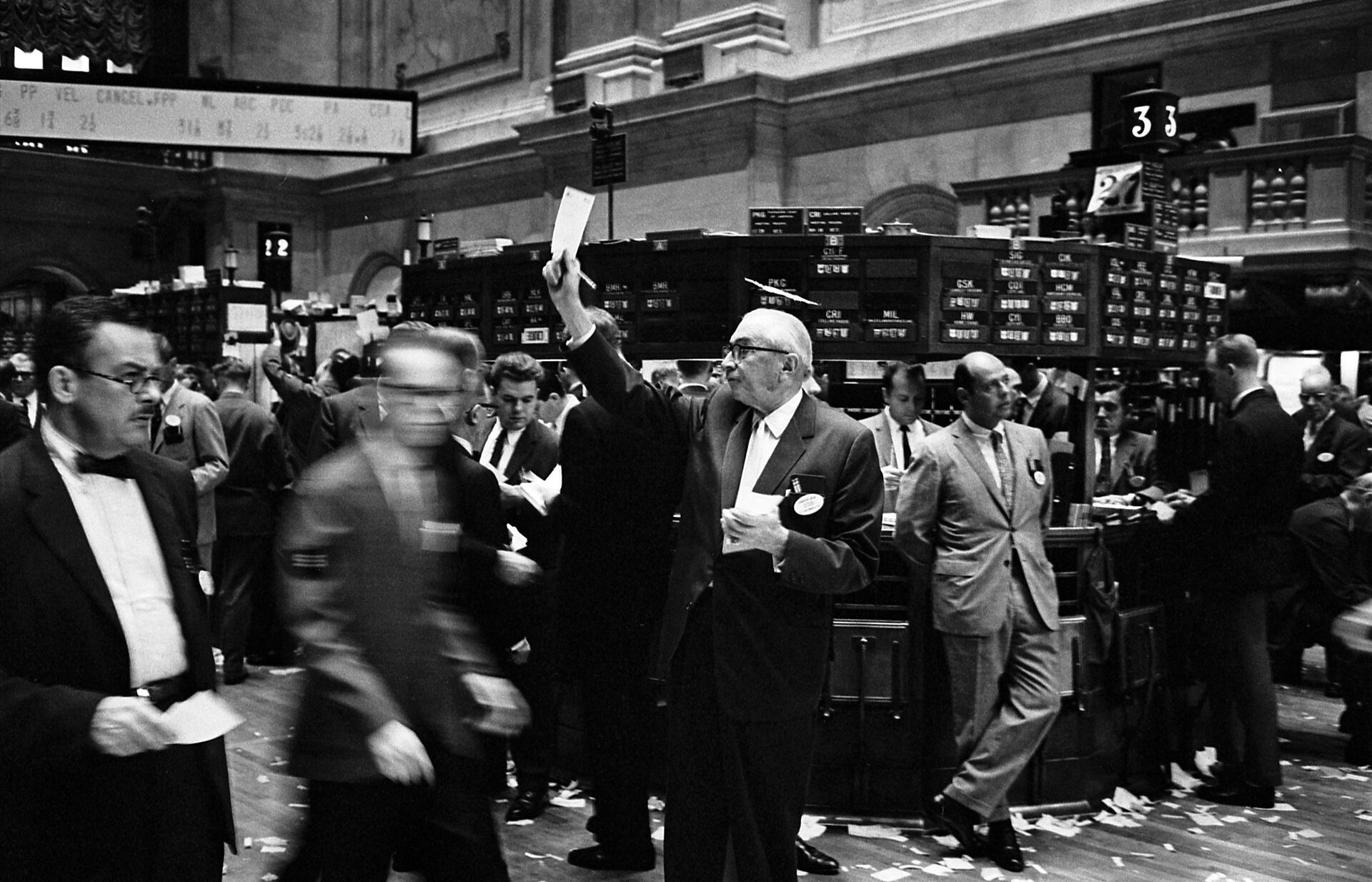
I read the headline first, and I believed it. “Nine companies block tokenized stock trading.” Broadcom, Verizon, UnitedHealth, CoreWeave, Rocket Lab, AppLovin, Applied Digital, Applied Optoelectronics, and Cerebras Systems. The framing writes itself: old finance plants itself in front of the future and says no.
Then I went and read the actual notice, and the headline turned out to be wrong in a way that matters.
Because the SEC did not reject anything here. The SEC is the party that opened the door. The rejection came from the companies whose stock would be listed — and what they rejected was not the concept of a tokenized share. It was one specific trading venue, filed by one specific joint venture, on one specific blockchain, and their veto expires the moment a different platform files its own notice.
That distinction is not pedantry. It is the entire mechanism, and it decides who actually controls whether US equities ever end up on a chain.
The Rule That Everyone Skipped
Here is the part I want to put in front of you before any of the company names, because without it the list of nine is meaningless.
On September 17, 2026, the SEC issued what it calls an Innovation Exemption — a five-year window, running to September 17, 2031, that lets tokenized securities trading venues operate without full exchange registration. There are conditions. The token has to carry the same dividend and voting rights as the underlying share, so no synthetic exposure. There is a cap on per-symbol volume. And then there is the condition that turns out to be load-bearing:
Before a venue can list a company’s stock, it must notify that company in writing and wait 30 calendar days. If the company objects in writing within that window, the venue cannot list it.
That last clause is the whole game, so let me write it the way I’d write it if it were code, because the control flow is the point:
on_platform_notice(venue, ticker):
    notify_issuer(ticker)            # written notice, required
    wait 30 calendar days
    if issuer_objects_in_writing:
        block(ticker) at venue       # this venue only
    else:
        clear(ticker) at venue       # this venue only
# objection scope: (venue, ticker)
# not: (ticker), not: (asset class)
Look at what that scope means. An objection is a tuple of venue and ticker. It is not a veto on the ticker, and it is certainly not a veto on tokenized equities as a category. To stop a second venue, a company has to file a second objection. And the inverse is the part nobody put in a headline: if a company does not reply within 30 days, that is consent. Silence is not neutrality. Silence is a yes.
objection(venue, ticker) → blocks one venue · silence(30 days) → consent, same venue
So when you read that nine companies “blocked” something, what actually happened is that nine companies pressed a switch the SEC had deliberately installed inside its own exemption, on one platform, during one 30-day window, and 54 other companies did not press it.
Who Actually Said No
OKXICE is a 50-50 joint venture between OKX and Intercontinental Exchange — ICE being the parent of the New York Stock Exchange. It is registered in Texas. Its co-chair is Andrew Cuomo, the former governor of New York. On October 5 it notified the SEC of its plan to launch, initially targeting 63 US-listed stocks, running 24/7 on Uniswap v4 liquidity pools over OKX’s XLayer chain, settling in stablecoins, with each token backed one-for-one by real shares held through a registered broker-dealer.
On October 15 it updated its public notice. Eight new objections, nine total.
| Company | Ticker | Note |
|---|---|---|
| Broadcom | AVGO | No stated reason |
| Verizon | VZ | No stated reason |
| UnitedHealth Group | UNH | No stated reason |
| AppLovin | APP | No stated reason |
| Applied Digital | APLD | No stated reason |
| Rocket Lab | RKLB | No stated reason |
| CoreWeave | CRWV | No stated reason |
| Applied Optoelectronics | AAOI | Only company to state a reason |
| Cerebras Systems | CBRS | Had already opted out earlier |
Nine out of 63 is roughly 14% of the intended first batch. Which means the other reading of this story is the one nobody wrote: 86% of the companies on the list did not object. Most of them, as far as the public record shows, said nothing at all — and under the rule I wrote out above, saying nothing is the same as saying yes.
Only one company explained itself. Applied Optoelectronics told the Wall Street Journal it was unsure what tokenization would do to its share price, liquidity, and volatility, that it worried investors would mistake an unendorsed third-party token for something the company itself issued, and — this is the sentence I keep coming back to — that it could not see a clear benefit to AAOI or its shareholders.
Eight companies filed objections and gave no reason. There is no evidence they coordinated. I am not going to pretend to know why Broadcom said no, and neither should anyone else.
Nasdaq Said No in the Opposite Direction
There is one more objection in this story, and it points somewhere else entirely.
Nasdaq is not among the nine. It said separately, in an FAQ on its own website, that it will not have its own shares tokenized under the framework. Its reasoning, via a spokesperson to the Wall Street Journal: it objects to its equity trading on a venue that does not display best available prices in real time and does not report transaction data to the consolidated tape — the system that aggregates US stock-market trading data.
That is a completely different complaint, and it is the more interesting one. Broadcom and the eight others are, as far as anyone can tell, protecting themselves. Nasdaq is describing a structural property of the venue design: a 24/7 AMM pool settles in stablecoins and, in this configuration, sits outside the consolidated tape. Nasdaq is not saying tokenized stocks are bad. It is saying this venue is a dark market dressed as an innovation. Coming from an exchange operator, that is a much heavier charge than anything in the nine filings.
What the Sell-Side Found, Which Is Worse
TD Securities, led by Reid Noch, its vice president of US equity market structure, spoke with dozens of issuers and published what they heard: there is “little interest in tokenizing their shares outside a small group of crypto-adjacent companies.” Several issuers reached out to TD with serious concerns after learning the framework existed — many had not known about it when it was announced.
Let that sit for a second. The companies whose stock is the product were, in a nontrivial number of cases, not consulted and not aware.
The analysts also named the single largest obstacle, and it is not the objections. It is that the whole framework rests on temporary exemptive relief rather than permanent rulemaking. A future Commission can reverse it. That uncertainty discourages exactly the institutional integration the framework is supposed to encourage, and it gets worse when you notice that offshore platforms can keep offering synthetic stock products without taking on any of the operational obligations the US relief imposes — which fragments liquidity and disadvantages the domestic venues that did comply.
I’ve written before about what an exchange’s jurisdiction actually costs you when a platform spans five legal entities and nobody can say which one holds your asset. This is the same shape of problem one layer up. The structure is legal, the disclosures are filed, and the accountability is diffuse enough that nine companies can say no for eight different unstated reasons and the market still reads it as one signal.
Why I Think the Headline Matters
Because the wrong version of this story produces the wrong trade.
If you read “nine companies block tokenized stocks,” you conclude that issuers have rejected on-chain equity and the thesis is dead. If you read what actually happened, you conclude something much narrower and much more useful: the gate on tokenized US equities is not the regulator and not the technology. It is a 30-day clock and whether a specific company bothers to answer the mail.
That gate has three consequences worth holding onto:
- A listing roster will never look like an index. Roughly 14% objected to the first venue. If that rate persists, tokenized equity offerings will be permanently skewed toward companies that are crypto-adjacent or simply inattentive. You are not buying the market. You are buying a filtered subset of it, and the filter is not disclosure — it is silence.
- Approval is not endorsement. Most of the 63 did not object. Some presumably reviewed and approved. Some almost certainly never opened the notice. The framework cannot distinguish between the two, and neither can you from the outside.
- The exemption expires. September 17, 2031. Every piece of infrastructure being built on top of this relief is built on something a future Commission can withdraw — and the TD point about offshore synthetics means the domestic venues are carrying costs their competitors are not.
What I’d Actually Watch

If you want to know where this goes, don’t watch the price of a tokenized share. Watch these:
- The final listing roster. Names and count, once the waiting period clears. The gap between 63 announced and whatever actually lists is the real objection rate, including the objections never filed publicly.
- Whether a second venue gets a different answer. The moment another platform files notices for the same nine tickers, we learn whether these were objections to tokenization or objections to OKXICE. This is the single cheapest experiment available and nobody has to approve it.
- Whether the consolidated tape question gets answered. Nasdaq’s objection is the one with structural teeth. If a venue starts reporting to the tape, that complaint dies. If none do, the “shadow market” framing becomes the standard critique, and it will be right.
- Any movement from temporary relief to permanent rulemaking. Until that happens, every roadmap in this space has a 2031-shaped hole in it.
The honest summary: the SEC opened the door, handed every issuer a veto over individual venues, and made silence the default approval. Nine companies used the veto. Fifty-four did not, or did not bother. That is not the market rejecting tokenized stocks. It is the market not having answered yet — and a framework that counts silence as consent will keep mistaking one for the other.
(The End)