

Conclusion first: a stablecoin balance is not a deposit and it is not a state currency. It is a liability of a private company, held inside a contract that the same company can switch off, and it pays its holder nothing while it sits still. The rest of this piece is the evidence, and then the places where the evidence stopped.
I took one object — the dollar token — and looked at it three times from three layers. The receipt layer asks what the token is a claim on. The control layer asks who can make it stop working. The yield layer asks who is paid for it while it sits. The three layers give three different answers, and once you have all three you cannot see the object as one simple thing again.
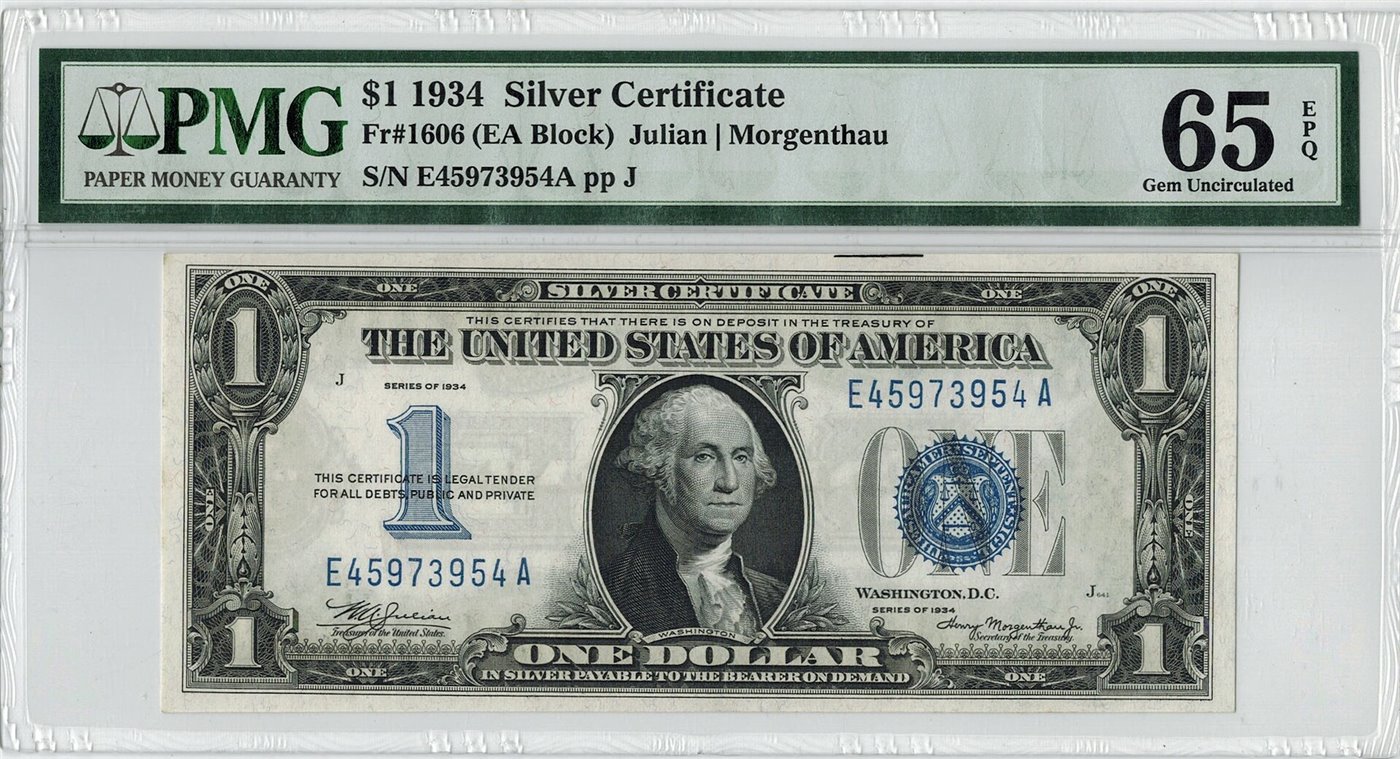
Your stablecoin balance is a liability, and nothing you hold changes that.
A bank note is a liability of a central bank. A deposit is a liability of a bank, with deposit insurance standing behind it. A stablecoin is a liability of a private company, and nothing stands behind it except that company’s reserves and its promise. On a screen the three are identical: a number, a dollar sign, six decimals of calm. Off the screen they are three different instruments, and only one carries a state’s promise.
The issuers do not claim otherwise. They publish attestations, which is a third party stating that certain reserves existed on a certain date. That is a narrower claim than an audit of the business, and it is the claim on offer. A stablecoin is not issued by a state, carries no deposit insurance, and is a single line on a private balance sheet. Before anything else, I measured how large that line is.
258.6 billion tokens, and where they actually sit
On 29 September 2026 I read the supply figures for the two largest dollar tokens. Tether’s USDT had a circulating supply of 183,874,242,892 tokens and a market capitalisation of $183,823,371,611. Circle’s USDC had a circulating supply of 74,716,198,333 and a market capitalisation of $74,708,070,164. Together that is 258,590,441,225 tokens, worth about $258,531,441,775.
An aggregate hides the fact that matters. A token can live on many chains at once, so the supply on one chain is only a slice. The cross-chain totals above come from a public market-data API: USDT reports a total supply across every chain of 189,341,188,918 and USDC reports 74,715,902,320. For the Ethereum figures I did not take a dashboard’s word for it. I asked each contract how much of the token sat there.
| Token | Issuer | Circulating supply | Market capitalisation | Supply on Ethereum | Share on Ethereum |
|---|---|---|---|---|---|
| USDT | Tether | 183,874,242,892 | $183,823,371,611 | 88,304,299,382 | 46.6% |
| USDC | Circle | 74,716,198,333 | $74,708,070,164 | 49,783,324,169 | 66.6% |
| Combined | two issuers | 258,590,441,225 | $258,531,441,775 | 138,087,623,551 | 53.4% |
The contrast is the point. More than half of USDT is somewhere other than Ethereum, while two thirds of USDC is on Ethereum. USDT’s share on Ethereum is 46.6 percent and USDC’s is 66.6 percent. Same category of object, two different shapes: the share column shows where each issuer placed its weight.
What is the token a claim on?
Receipt layer first, because that is the question the word “stable” is meant to answer. A dollar token is not a dollar. It is a claim on the issuer: hold USDT and you hold Tether’s liability, hold USDC and you hold Circle’s. The value does not come from the token; it comes from the promise of the company that issued it.
That promise has an exact width. Redemption at one to one is available to the issuer’s own direct customers under its terms, which is not the same thing as a retail holder being able to hand a token back on a chain. Circle’s terms and transparency pages returned HTTP 403 to every request I made, so I read Circle’s contract directly but could not read Circle’s prose. Tether’s own words are available, and they are plain.
All Tether tokens … are pegged at 1-to-1 with a matching fiat currency and are backed 100% by Tether’s reserves.
Tether, on how its tokens work
Read that as an engineer. It says the tokens are backed by reserves. It does not say the reserve is a bank deposit, that the holder owns it, or that it holds only Treasury bills. An attestation confirms that reserves existed on a date, not that the book is sound. That is the width of the promise, and it is narrower than the word “backed” sounds in a headline.
The issuer’s contract can stop your balance working.
Control layer next, because a claim you cannot move is a different instrument. A token balance lives inside a contract, and a contract is a program with an owner who writes the instructions the program obeys. That is what a balance in a contract actually is, and it is why the issuer holds a switch the holder never sees. I read the two largest contracts on Ethereum mainnet through a public RPC, with no key.
Both answer basic reads. USDT at 0xdAC17F958D2ee523a2206206994597C13D831ec7 returns decimals() of 6, a symbol() that decodes to USDT, and a totalSupply() of 88,304,299,382. USDC at 0xA0b86991c6218b36c1d19D4a2e9Eb0cE3606eB48 returns the same six decimals and a totalSupply() of 49,783,324,169. Six decimals is why a raw integer from a contract looks far larger than the figure a person writes down.

The reads that are not in the marketing are the interesting ones. USDT exposes a read function whose selector is 0xe47d6060, and 4byte.directory, a public signature database, resolves that selector to isBlackListed(address). USDC exposes a read function whose selector is 0xfe575a87, and the same database resolves it to isBlacklisted(address). Two issuers, two names, two selectors, the same idea, and the difference in capitalisation tells you the names were chosen independently.
| What I called | On which contract | Selector | What came back |
|---|---|---|---|
| isBlackListed(random address) | USDT | 0xe47d6060 | false |
| isBlackListed(the USDT contract’s own address) | USDT | 0xe47d6060 | true |
| isBlacklisted(random address) | USDC | 0xfe575a87 | false |
| AddedBlackList(address) | USDT | 0x42e16015… | present in the interface |
| DestroyedBlackFunds(address,uint256) | USDT | 0x61e6e66b… | present in the interface |
I called each freeze query with the same arbitrary address, 0x1111111111111111111111111111111111111111. USDT returned false and USDC returned false. Then I called USDT’s function with the USDT contract’s own address, and it returned true. I did not determine why that address is on the list, and I will not guess. I report the observation and stop.
The call shows the switch exists, answers for an arbitrary address, and was already thrown for one address I happened to try. The same interface, read through the same public database, resolves two event signatures. AddedBlackList(address) carries the topic 0x42e160154868087d6bfdc0ca23d96a1c1cfa32f1b72ba9ba27b69b98a0d819dc, and DestroyedBlackFunds(address,uint256) carries 0x61e6e66b0d6339b2980aecc6ccc0039736791f0ccde9ed512e789a7fbdd698c6. The second name is not a label. It names destruction of the funds.
the right to either freeze your Tether Tokens or seize and recover against any of your Tether Tokens, other Digital Tokens, Fiat or other funds, or your interests therein, that are held by Tether or any Associates.
Tether, Terms of Service
That clause is the switch in prose. It sits in the issuer’s terms, not in a footnote on a marketing page. I tried to count how many times the blacklist has fired recently and failed. Every public RPC endpoint I tried refused the log query, returning 403, 400 and 525, or told me the block range was too large. I have no count and I will not estimate one. The function names come from a third-party signature database, not from the issuers, so treat them as a strong resolution rather than an official label; the selectors and the return values are what I read directly.
A float that pays the issuer, not you
Yield layer last, because this is where the money moves. When you hold the token, the dollar behind it does not sit in your account. It sits in the issuer’s reserve, and the reserve is invested. The interest on that investment goes to the issuer, and you hold a token that pays nothing while it sits still. That is how a peg is held up by market structure rather than by a promise.
I took the rate from the source rather than from an article. The US Treasury publishes its own daily Treasury bill rates. For 28 September 2026 the 13-week bill carried a bank discount rate of 4.10 percent and a coupon equivalent of 4.20 percent. The same date, other tenors: 4-week 3.89 / 3.96, 26-week 4.27 / 4.42, and 52-week 4.34 / 4.54.
Now multiply. Here is the arithmetic in the open, so you can repeat it.
- Start with the coupon-equivalent rate on the 13-week bill for 28 September 2026: 4.20 percent. Use the coupon equivalent, not the discount rate, because the coupon equivalent is the number comparable to the yield a fund reports.
- Multiply USDT’s circulating supply of 183,874,242,892 by 0.042. That is about $7.72 billion a year on USDT alone.
- Multiply the combined circulating supply of 258,590,441,225 by 0.042. That is about $10.86 billion a year, which rounds to about 10.9 billion.
- Ask who receives it. Holders are paid nothing for holding. They have lent dollars to a company and received a token instead of interest. The interest a money market fund would pass to a holder is retained by the issuer.
- Apply the caveat before you quote the number. The reserve portfolio is a mix rather than a pure bill portfolio, and the issuers have real operating costs, so the actual interest income is lower than this product. The point is the direction of the payment, not the precision of the figure.
That one multiplication is the whole business model. The float is lent to the issuer for nothing, and the return on the float belongs to the issuer. This is a yield on a published rate, not the issuer’s profit. Redemption at one to one is available to the issuer’s own direct customers under its terms, which is not the same thing as a retail holder being able to redeem a token on a chain.
Read the contract and the rate table yourself.
None of this needs a key, a license, or a friend inside the company. It needs two public sources and about ten minutes. Here is the method, in the order I ran it.
- Ask the contract for decimals(), symbol() and totalSupply(). Point any public endpoint at the address and decode the return. That gives you the unit and the size without trusting a dashboard.
- Call the freeze query yourself with an arbitrary address. Use the selector from the contract and pass an address you made up, then read the boolean that comes back. You are not asking the issuer, you are asking the program.
- Look the selector up in a signature database. A selector is only four bytes, and the name attached to it comes from a public registry, so treat the name as a strong resolution and the behaviour as the fact.
- Open the issuer’s own terms that contain the remedy clause and read the document that governs the account. The clause that lets the issuer freeze or seize is in the terms, not in the marketing.
- Get the bill rate from the Treasury’s own published rates rather than from an article. The coupon-equivalent column is the comparable one, and it is published daily by the department that issues the bills.
Run it once and the abstraction leaves. A token stops being a picture of a coin and becomes a contract you queried, a boolean you read, and a clause you parsed.
Who is on the losing side of the transaction?
Follow the money and you reach the human at the end of it. The holder lends dollars to a company and is paid nothing for the loan; the company earns the rate on those dollars. The balance is large enough that trading venues treat it as a reserve asset, which makes a private company’s liability load-bearing for the market. When the reserve asset is somebody’s liability, that somebody’s counterparties are exposed to it whether they chose it or not.
Here the control layer stops being academic. In the last week, published reporting said Tether helped freeze close to $550 million of USDT linked to Iran. The headlines appeared at The Defiant on 28 September 2026, at CryptoPotato on 29 September 2026, and The Block reported on 28 September 2026 that a US Senate report placed USDT at the centre of an Iranian shadow banking network. I could not reach the underlying Senate report from here, so I go no further than the headline figure that was published.
Three views of one object
So the object is three objects. As a receipt, it is a claim on a private company, backed by reserves that are attested rather than audited. As a control surface, it is a contract with an administrative switch, and the switch answers to the issuer. As a yield, it is a loan of your dollars to the issuer for nothing, while the interest a money market fund would pay you stays with the issuer. The same balance reads differently depending on which layer you ask.
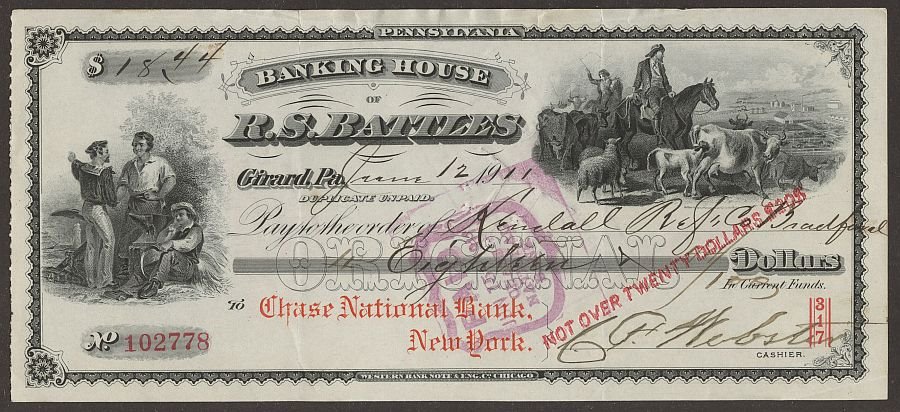
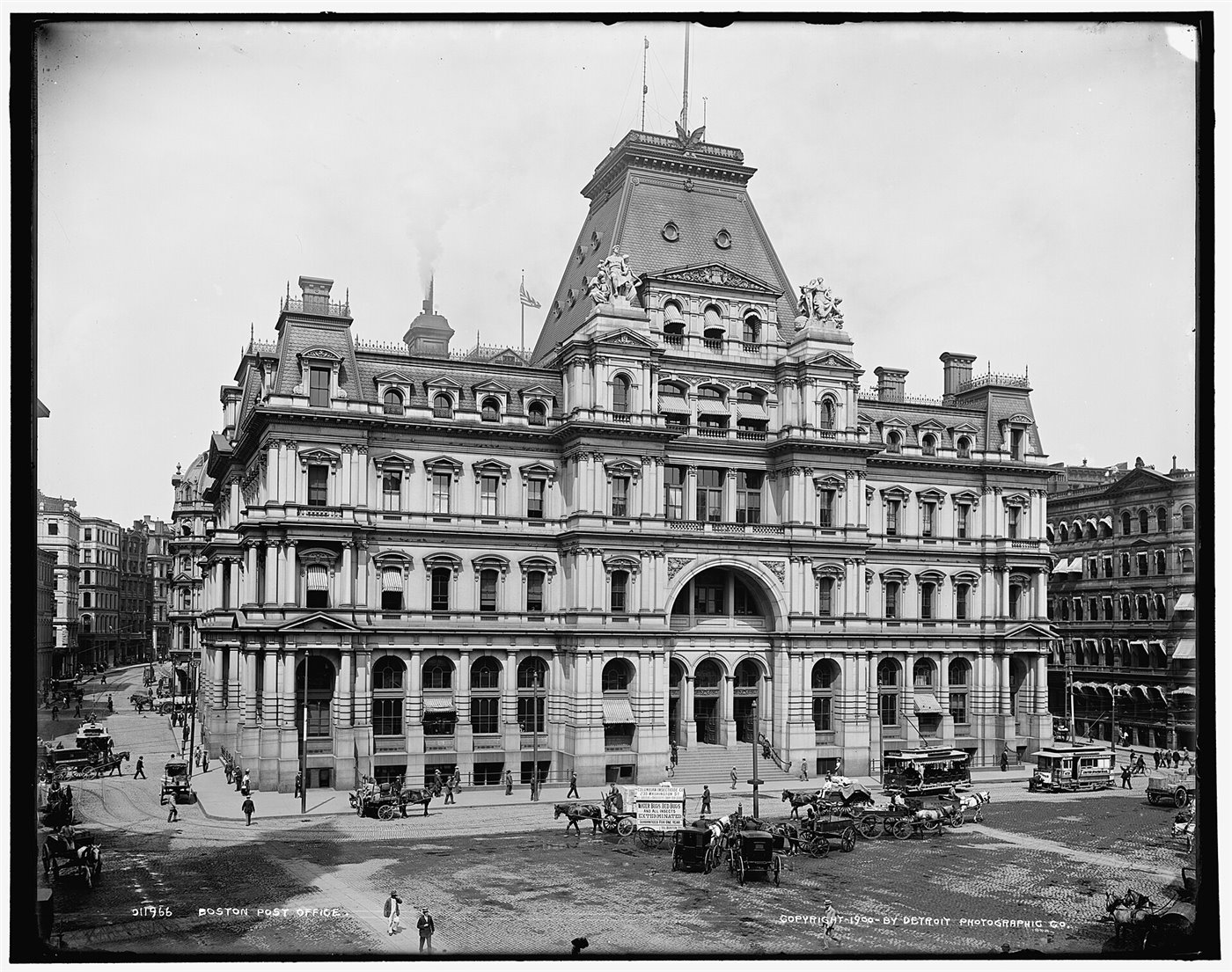
None of it is new, only renamed. A note that promised metal, a draft that cleared through another bank, and a token that promises Treasury bills are the same shape of instrument across three centuries: a private promise to pay, wrapped in a piece of paper, then a database entry, now a contract call. I measured the size, read the switch and demonstrated it, and ran the rate. I did not count how often the switch has fired, I could not read Circle’s prose because its pages answered 403, and I did not explain why one address came back true. Those three blanks are the edge of what I know, and I would rather hand you the edge than fill it with a story.


[…] who do the selling, which is why the launch mattered more to payments companies than to traders. A stablecoin is a receipt whose issuer keeps the interest; this one gives the interest to the intermediaries, and asks to be repaid in volume and in equity […]
[…] bills, cash at banks, and money market funds, held with custodians and disclosed periodically. The two largest dollar tokens together account for roughly $260 billion of this float, and the interest earned on those reserves is the issuer’s […]
[…] a wallet is where keys live, and the balance lives on a public ledger that nobody can edit for you. A stablecoin balance is a receipt, an exchange balance is a promise, and a self-custody key is neither: it is the only one of the […]
[…] describes outputs and account state; it says nothing about who owns what at law, which is why a token balance can be a claim on a company in one arrangement and a key-held asset in another with identical interface and different […]
[…] see our note on the ten checks a top-ten ranking cannot do for you, and our explainer on why a stablecoin is a receipt rather than a coin. The settlement race between issuers is covered in one chain per issuer, and the fundamentals of […]