

Here is the judgment first, because everything after it is only the reasoning. The two loud stories of the week of September 24 were Kalshi losing its appeal over Ohio and Tennessee sports-betting laws, and Bitget confirming a $387.5 million breach of its hot and warm wallets with North Korea named as a suspect. Neither is the real story. Those are the sounds a market makes while something structural happens underneath it, and the sound is always louder than the structure. The real story is that traditional equities are being rerouted onto rails that crypto built, and that almost nobody inside the trade is asking the only question that survives a cycle, which is who owns the rails and who pays the maintenance.
Watch one week and the shape appears. On September 18, Coinbase, Kraken’s parent Payward through its Bitnomial exchange, and Kalshi each filed with US regulators to offer perpetual futures tied to individual US stocks. On September 25, OG.com, the prediction markets and derivatives platform recently spun out of Crypto.com and valued at $5 billion, filed with the CFTC to list cash-settled single-stock futures that never expire and trade twenty-four hours a day, five days a week. Crypto.com chief executive Kris Marszalek said at the spin-off that the platform would expand beyond prediction markets into futures and perpetual contracts, and Robinhood has taken an equity stake as part of a multi-year deal to use its CFTC-regulated derivatives exchange and clearinghouse. Underneath the filings, tokenized shares turned up as collateral for loans, equity perpetuals turned up inside a stablecoin hedge, and strategy baskets and venture funds moved onchain. Put plainly, the stock market is moving onto rails crypto built.
That sentence is doing all the work, so I will slow down. A rail is not a product. A rail is the boring thing everyone else has to stand on: settlement, clearing, funding, liquidation, the machinery that decides who owes whom when the music stops. Products get a launch. Rails get a maintenance bill for the next twenty years. So the interesting question is not whether stocks go onchain. The interesting question is who owns that machinery, who collects its fee, and who is left holding the invoice when it breaks at three in the morning.
The Perpetual Did Not Come From Wall Street. It Came From Not Having One.
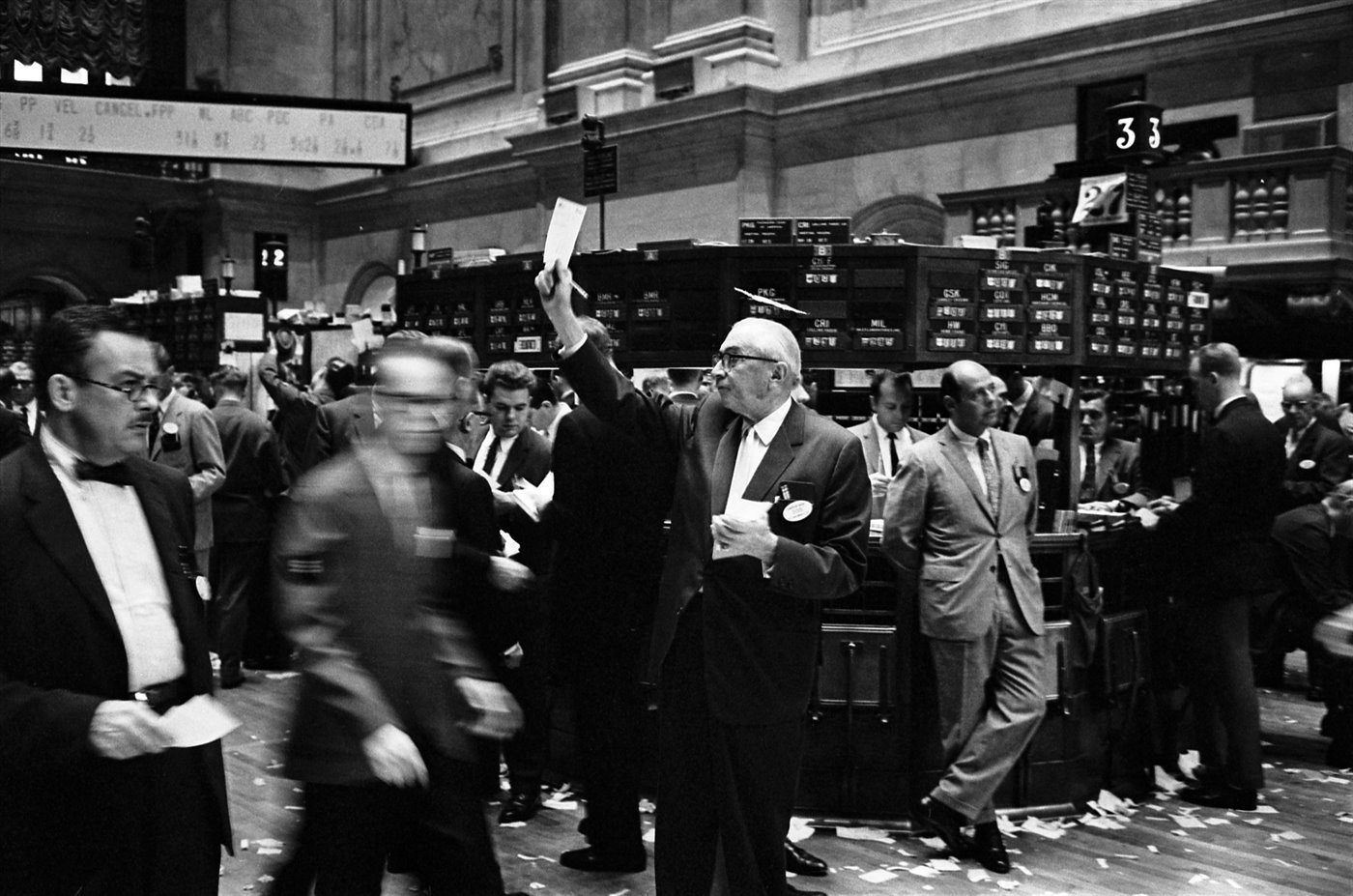
Trace the origin, because origin tells you whose pit a thing is filling. The perpetual future was pioneered by BitMEX in 2016. It has no expiration date. In a normal future, the contract expires, the position settles, and everyone goes home; the exchange needs a clearinghouse, a settlement calendar and a closing bell to make that happen. Crypto in 2016 had none of those. No clearinghouse, no settlement calendar, no closing bell. So the perpetual replaced all three with a funding rate, a small periodic payment between longs and shorts that drags the contract price back toward spot and does the job that expiry and settlement used to do. That is the whole trick. When you cannot borrow the house you want, you build a slightly strange one that needs no roof.
This matters because it tells you what the product actually is. It is not a better future. It is a future that exists because the institutions that normally underwrite futures refused, at first, to touch this market. The perpetual is infrastructure built out of absence. And absence, as any systems engineer knows, is the most reliable architect there is. It does not ship a roadmap. It ships whatever keeps the lights on.
In Ten Days the Regulator Learned the Product in Public
The filings did not appear in a vacuum. In May 2026 the CFTC set up a case-by-case review process for perpetual contracts and approved Kalshi’s bitcoin perpetual futures. In June 2026 it granted temporary relief letting certain registered exchanges convert existing crypto futures into contracts with no expiration date. By September 18 the equities crowd was at the door asking for the same treatment, and the regulator was reading the manual out loud as it went. That is the tell. A regulator that already understood a product would write a rule; it would not need a case-by-case sandbox. When an agency invents the product category one applicant at a time, it is learning in public, and the market is the classroom.
There is a pattern here that predates the perpetual, and it is worth naming directly. Crypto Got a Spec Instead of a Law, and the same month Congress proved the point again: on September 15 the CLARITY Act failed to advance in the Senate, and days later the SEC cleared limited onchain trading of tokenized US stocks under its Innovation Exemption. Notice the sequence. The legislature deadlocks, and the agency grants an exemption. The general rule is never written; the exception is handed out. That is how every one of these markets has arrived, and the second reference is worth the detour: Prediction Markets’ Real Problem Isn’t the Courts. The courts, the statutes and the exemptions are all downstream of the same thing, which is that nobody with authority wants to write the general rule and then own its consequences.
A Liquidation Engine That Never Sleeps, Backed By a Market That Does
Now put the tokenized share where it actually goes. On September 25, Aave V4 on Base added Apple, Nvidia, Tesla and four more tokenized stocks as collateral for USDC loans, for non-US users only. Read that twice, because the risk is hidden in plain sight. The loan market runs every hour of every day. The stock market does not. It closes. It has a settlement cycle. It can halt. It pays dividends at moments nobody onchain controls. So you have a liquidation engine that never sleeps, standing on an underlying market that does, and the gap between those two clocks is the whole question of risk. The perpetual solved this problem by having no underlying to close; that is precisely why it was invented. Tokenized equity as collateral reintroduces the very thing the perpetual was built to escape, and then hands it to a liquidation bot that cannot tell Friday night from Monday morning. When your collateral has a heartbeat, you had better know when the heart stops.
Extending the Basis Trade to Equity Perps Is Not Diversification. It Is the Same Bet Twice.
On September 25, Ethena said it is adding Binance bStocks and equity perpetuals to the basis trade used for USDe’s backing strategy. USDe is backed by a delta-neutral trade: buy spot, short the perpetual, collect the funding. Understand the trade and you understand the move. The basis trade earns the funding rate, and the funding rate is a symptom of one crowded market. Extending it from crypto perps to equity perps does not spread your risk across two markets that move independently. It spreads one trade across two of the only markets on earth that now behave like each other, because both are driven by the same funding reflex and the same chase for leverage. That is not diversification. That is leverage auditioning for a second role.
I have watched this pattern for twenty years and it always ends the same way. Two supposedly separate books share one hidden factor, and when the factor moves both books lose at once. The word for this used to be correlation, and now it is strategy. It is the same thing wearing a better suit.
Only Two of the Three Doors Are Worth Building
I judge systems by three doors. Door one is the business function: does the thing work at all. It is labour-intensive, it is mostly sweat, and it earns the least. Door two is performance and scale: does it hold when everyone shows up at once. That needs real engineering, and that is where the money lives. Door three is intelligence and programmability: can other people build on it without asking your permission. That needs research-grade knowledge, and that is where the moat lives. Most of what I saw this week is door one dressed as door three. A filing is door one. A tokenized wrapper is door one. The questions that matter live behind the other two doors: whether the clearing and liquidation machinery actually holds under a cascade, and whether the funding rate, the oracle and the collateral rules become something others can program against. Anyone can file. Almost nobody can afford to keep the lights on.
BlackRock’s Name Sells It. BlackRock Carries the Least Of It.
On September 24, Ondo launched three onchain portfolio tokens built on model portfolio strategies developed by BlackRock: BLKHIon for high income, BLKDIGon for diversified growth and BLKGRWon for high growth. They carry a whole allocation, rebalance onchain, move peer to peer, and are available to eligible investors outside the US. ONDO rose about thirty percent on the news. Now read the disclosures, because the disclosures are the story. Ondo’s own filings state that BlackRock is not the adviser, manager, sponsor, promoter, underwriter, marketer or distributor, exercises no supervision or control, and has a potential conflict. That is not institutional adoption. That is a brand-licence agreement. BlackRock lent a name and a model, kept a discipline of silence and carried almost none of the risk. I have watched this for twenty years and the rule never changes: whoever’s name sells the product carries the least exposure to it. The brand is paid up front. The builder eats the downside.
Set the rest of the week beside it and the pattern repeats. ARK Invest brought its $1.3 billion ARK Venture Fund, which holds OpenAI, Anthropic and Stripe, onchain through Securitize on Ethereum. The NYSE is working with Blockchain.com to bring US stocks and ETFs onchain. Context matters here too: BlackRock’s BUIDL put a money market fund onchain back in March 2024, and in July Ondo tokenized BlackRock’s iShares Core S&P 500 ETF alongside Micron shares. The direction is unmistakable, and so is the seat every large name is taking. The tenant moves in. The landlord keeps the building.
The Market Got a Third Smaller and the Pipes Got 78% Busier
Then go down a layer to the money, because money is where the truth is kept. Binance is taking a $100 million stake in Circle: 1,237,011 Class A shares at $80.84 in a September 17 private placement, alongside a five-year agreement to expand USDC adoption, a monthly incentive fee based on USDC held through the exchange, and a lockup of up to two years. Read that as what it is. It is not a bet on a token’s price. It is a bet on controlling the float, which is the actual product. Whoever decides where the dollar stablecoin sits owns the settlement layer under everything above it.
Canada is asking the same question in a quieter voice. The country’s six largest banks, BMO, CIBC, National Bank of Canada, RBC, Scotiabank and TD, are jointly exploring tokenized Canadian dollar deposits. On September 10, 2026 the Office of the Superintendent of Financial Institutions clarified that tokenized deposits are “not legally distinct” from traditional deposits. That is a regulator making a plumbing decision, and the market noticed: Quant (QNT) Jumps 66% After Clearing House Tokenized-Deposit Push.
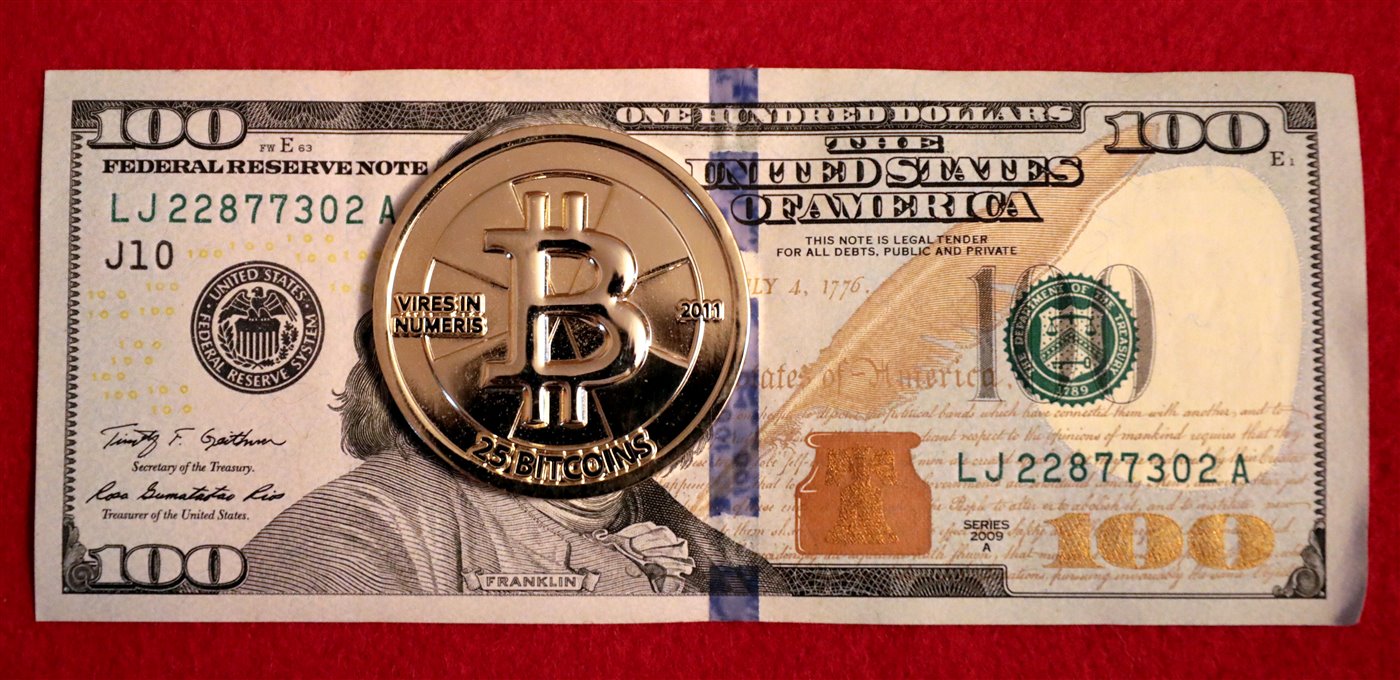
Now hold the two halves of the ledger side by side, because they do not agree, and the disagreement is the point. Chainalysis reports that cross-border stablecoin flows rose 77.5 percent to $220.3 billion in the year through June, while total crypto market capitalisation fell 37 percent to $2.1 trillion. In the same period, 4,708 new cross-border corridors carrying $2.64 billion were identified, with an average transfer size around three thousand dollars, consistent with trade, remittances and savings rather than speculation. Sit with that. The market got a third smaller and the pipes got seventy-eight percent busier. Prices fell and usage rose. That is not a contradiction. That is the sound of the plumbing separating from the casino.

Both Flagship Products Are Unavailable to Americans. That Is a Branch Office, Not a Market.
Look now at who can actually touch any of this. Aave’s tokenized-stock collateral: non-US users only. Ondo’s BlackRock-model baskets: eligible investors outside the US. The two flagship products of the week are walled off from American users, in the country whose equities they track, under the rules of the regulator that just approved the underlying category. That is a branch office, not a market. A market sets the rules for everyone inside the border. A branch office sells the parent’s product to whoever is standing outside the line. And the line is drawn by people who cannot yet describe the product without reading from the applicant’s own paperwork.
Which makes SEC Commissioner Hester Peirce’s argument the sharpest thing said all week. She has called for zero-knowledge proofs to replace what she calls the KYC panopticon, letting users prove eligibility without surrendering personal data. Understand why that matters here: eligibility is exactly the wall just described, and a wall built out of data collection is why the branch office exists at all. Prove you are outside the US. Prove you are accredited. Prove it without handing over the passport and the address that then sit in somebody’s database forever. Peirce leaves her SEC seat on October 2, 2026, which means the best argument of the week is walking out the door, and nobody has replaced it.
Every Rail in Finance Started Ugly and Offshore. That Does Not Make the Bill Go Away.
Now the honest counter-argument, because I do not write essays to hear myself agree with myself. Every rail in finance started ugly and offshore. Eurodollars were a loophole for anyone who wanted to hold dollars beyond the reach of the Federal Reserve, and today they are the spine of global funding. The swap market, the repo market, the earliest derivatives, all of them began as the thing respectable people would not touch, and all of them ended as the thing respectable people cannot function without. So when someone tells you that single-stock perps and tokenized deposits are a scam wearing a suit, remember that the suit is usually how the scam becomes the standard. The offshore phase is not a disqualifier. It is the normal first act.
But that argument cuts both ways, and here is where I land. Each of those rails succeeded because a clearinghouse eventually guaranteed it, a central bank eventually backstopped it, and a regulator eventually wrote the general rule instead of handing out exemptions. None of those three things happened this week. What happened this week is that the products got sophisticated while the guarantees stayed absent, and the funding rate got stretched from one crowded market into two. The perpetual was always a clever answer to missing infrastructure. It is now being asked to serve as the infrastructure itself, on top of equities whose clocks it cannot match, with brands lending their names and keeping their distance, in a jurisdiction whose flagship products its own citizens cannot buy.
So here is the closing judgment, and it is the only one I have for the week. The plumbing is now the product. The rails are the story, the fees flow to whoever owns settlement and clearing, and the maintenance bill flows to whoever built without asking who pays it in year twenty. The crypto firms have spent a decade learning to lay rails better than anyone. What they have not yet proven is that they can afford them. Because it is one thing to build the building. It is another to still be holding the title when the tenant moves out, and right now the tenant is moving in, signing a five-year lease, and letting you carry the mortgage. Buy the building first. Then rent it. Not the other way around.


