


The Senate killed the Clarity Act last week by two votes — and within 48 hours the industry got something arguably more useful. The SEC opened a tokenized-stock “innovation exemption.” The CFTC issued no-action relief aimed at wallet apps and sent a market-structure rulemaking to the White House. The Federal Reserve proposed reserve, capital and redemption standards for stablecoin issuers under the GENIUS Act. Read as politics, that is a defeat for the legislative strategy crypto spent two years building. Read as engineering, it is the arrival of something the sector has lacked since 2017: a written interface specification — incomplete, revocable, and unusually legible.
Whether a rule is a law or a regulation matters enormously to lawyers. It matters differently to the people who decide what actually gets deployed. From that seat, the question is not who won the vote. It is: what does the spec say, what does it let me ship, and how stable is it?
The week in one table
| Agency | Instrument | What it actually changes | Status |
|---|---|---|---|
| SEC | “Innovation exemption” for tokenized stocks | Qualifying venues can trade tokenized US equities onchain without registering as national securities exchanges | Introduced by Chair Paul Atkins as a direct answer to the Clarity Act’s failure |
| CFTC | No-action position plus a rulemaking draft | Passive software providers, wallet apps included, can give users access to regulated derivatives without registering as introducing brokers | No-action relief live; the broader crypto-markets rule sits with the White House, text not public |
| Federal Reserve | Reserve, capital and redemption standards | Payment stablecoin issuers must fully back tokens with short-term Treasuries or comparably liquid assets, hold capital against operational risk, and apply through a defined process | Proposed Sept. 24 as part of the GENIUS Act rollout |
| OCC | Stablecoin rules for chartered issuers | Bank-chartered stablecoin issuance standards | Racing to finalize by November, ahead of a January statutory deadline |
| Congress | Clarity Act | Market structure, once and for all | Failed 49-50 on a procedural vote; lead architect Sen. Cynthia Lummis called it effectively dead for the year |
Two smaller items complete the picture. An SEC staff FAQ published Sept. 25 said that announcing a token buyback on a functioning network does not by itself turn a token into a security — a definitional clearing of the ground under token treasuries. And the Blockchain Association confirmed a leadership transition, with Summer Mersinger stepping down and Kristin Smith returning as interim CEO: a personnel-level admission that the legislative route needs rethinking.
Why the bill died, and why the reason matters less than it seems
The Clarity Act fell 49-50 on a procedural motion that needed 60 votes. Democrats opposed it, three Republicans joined them, and the sticking point was ethics language tied to the president’s own crypto ventures. Lummis, who spent more than a year building the bill, said the effort is all but dead for this Congress.
The industry’s Washington strategy rested on one word for two years — clarity — and on the theory that a statute would be worth more than a thousand press releases. That theory was not wrong. It was slow, and it collided with a political constraint that no amount of drafting could fix.
Trace the path, not the headline
If you want to know where US crypto regulation is going, do not stare at the vote count. Trace the line. The 2017–2018 ICO wave produced enforcement-as-policy from 2021 to 2024, when the SEC under Gary Gensler ran what the industry called regulation by enforcement. That produced demand for statutory rules, which produced the GENIUS Act on stablecoins in 2025 — the first real federal framework. Statutory momentum then produced the Clarity Act, which collapsed in September 2026, which produced three agencies writing their own instruments within 48 hours.
Each step was a response to the damage caused by the previous one. Nobody designed this sequence. It is the pattern you see in any system under pressure: the framework arrives after the pain, and the pain arrives before the framework. The practical consequence for anyone building today is that the rules now arrive in three dialects — the SEC’s, the CFTC’s and the Fed’s — rather than one statute, and each dialect has its own lifecycle, its own vocabulary and its own expiry risk.
What the spec actually says
Read the three instruments the way an engineer reads an API reference, and the design intent becomes visible.
- SEC: tokenized equities get a lane. The innovation exemption lets qualifying venues trade tokenized US stocks onchain without registering as national securities exchanges. It is a scoped exception, not a general permission, and the operative word is “qualifying.”
- CFTC: the wallet stops pretending to be a broker. The no-action position covers passive software providers, wallet apps included, so that offering access to regulated derivatives no longer automatically makes a team an introducing broker. In practice that deletes a registration requirement most wallet teams could never satisfy.
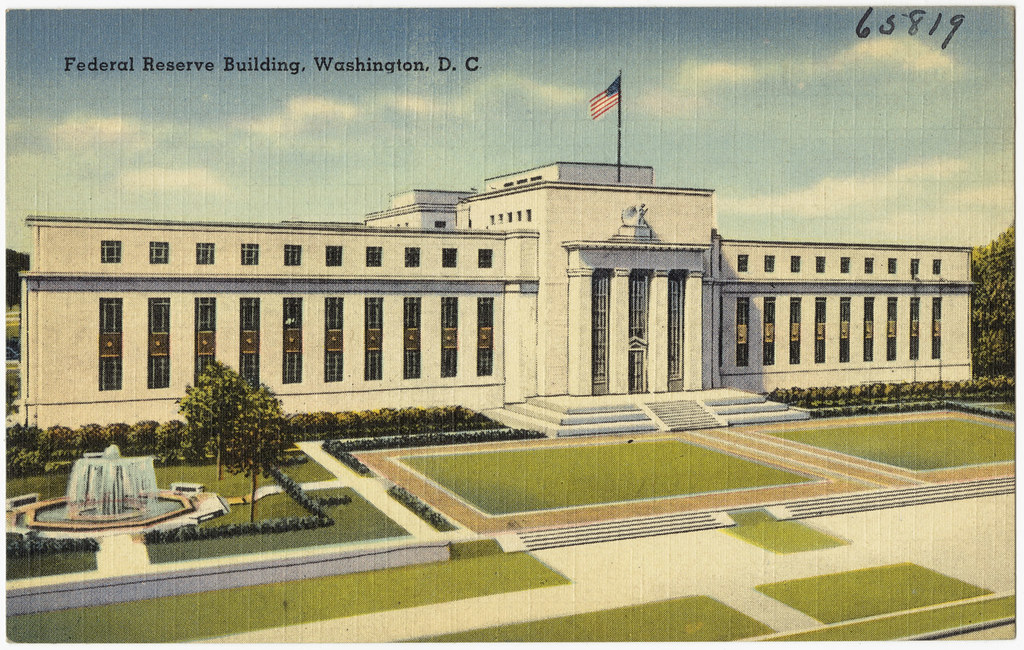
- Fed: stablecoins get a balance-sheet test. Full backing with short-term Treasuries or comparably liquid assets, standardized capital for operational risk, and a defined application process for board-supervised banks that want to issue. Governor Michael Barr backed the proposal while objecting to its “significant or systemic” threshold for anti-money-laundering enforcement — a reminder that this spec is still being negotiated inside the agencies, not only between them.
Note the direction of travel. Each instrument reduces the number of things a team must build, license or argue about in order to operate legally. That is what a good interface does: it converts a pile of uncertainty into a smaller, named set of obligations.
The implementation layer moved within hours
A specification is only interesting if implementations follow it. Watch what shipped alongside these rules. Aave V4 on Base added Coinbase tokenized stocks as collateral for USDC loans. Ethena expanded USDe’s backing strategy into tokenized equities and equity perpetuals on Binance. ARK Invest brought a $1.3 billion venture fund onchain through Securitize.

Isolated, these look like product launches. Together they look like an ecosystem responding to a newly legible rulebook, pulling tokenized instruments out of the narrative bucket and into collateral, yield and fund structures. That is what happens when a spec lands: not one winner, but a wave of implementations — most mediocre, a few becoming infrastructure.
The interest rate on a regulation
Here is the honest cost, and it is the same cost you pay whenever you choose a configuration over an invariant. Agency rules are slower to write than a statute, easier to challenge in court, and easier for the next administration to unwind. The United States is currently running crypto policy through instruments that a future SEC chair can reopen with a different memorandum.
That is not theoretical. Kalshi lost on appeal, with courts in Ohio and Tennessee cleared to regulate sports-event contracts under state gambling law — widening a split that now points toward the Supreme Court and demonstrating how much of this industry’s operating environment is decided by venue rather than by rule.
Timelines carry their own risk. The GENIUS Act’s first implementation deadline slipped in July, the OCC is racing to finalize stablecoin rules by November, and the law’s effective date is January 2027. Any business model that treats a rule as permanent is carrying a debt it cannot see. A specification a future administration can revoke in a week is a lease, not a title.
How to read the next rule like an engineer
- Which layer does it touch? Issuance, custody, trading venue, payments clearing. Rules that touch several layers at once — the Fed’s stablecoin proposal — change architecture. Rules that touch one, like the CFTC’s no-action relief, delete a form.
- What is the exact qualifying condition? “Qualifying venue,” “passive software provider,” “payment stablecoin issuer.” The definitions are the product. If you cannot map your system onto the definition in one sentence, you are not covered.
- What is the failure mode? Court challenge, election, agency memo, missed deadline. Say it out loud, then write down what you would change if it happened.
- Is it consistent with the other dialects? SEC versus CFTC on overlapping instruments, Fed versus OCC on issuer standards. Where two agencies describe the same object differently, budget for both readings.
- Does it reduce what you must build? A rule that removes a registration step, a legal opinion or a bespoke compliance programme is worth more than one that merely tolerates you.
- What does it make measurable? Reserve composition, audit frequency, redemption windows. Numbers you can publish and be checked against are the closest thing to an invariant a regulated market offers.
Market snapshot
Markets took the week in stride. Bitcoin traded near $83,600–$84,500 depending on the snapshot, Ether near $2,660–$2,685, and total market capitalisation held around $2.87 trillion. Bitcoin ETFs extended a seven-session inflow streak, adding roughly $2.4 billion on the week — their largest since October, and enough to turn 2026 flows positive. Bitcoin Magazine put the same weekly figure nearer $3 billion, which is itself a fair illustration of how loosely numbers travel before audits catch up.
Read that as a verdict on the spec rather than on the politics: capital is being allocated on the assumption that regulated rails will arrive, even while the paperwork authorising them keeps changing hands.
FAQ
Why did the Clarity Act fail?
It failed a procedural vote 49-50, short of the 60 needed, after Democrats and three Republicans opposed it over ethics provisions tied to the president’s crypto businesses. Senator Cynthia Lummis, the bill’s lead architect, has said the effort is effectively dead for this year.
What is the SEC’s tokenized-stock innovation exemption?
A framework introduced by SEC Chair Paul Atkins that lets qualifying venues trade tokenized US stocks onchain without registering as national securities exchanges. It is a scoped exemption rather than a blanket legalisation of tokenized equities.
What did the Federal Reserve propose for stablecoin issuers?
That payment stablecoin issuers fully back their tokens with short-term Treasuries or comparably liquid assets, meet standardized capital requirements for operational risk, and apply through a specific process if they are board-supervised banks. It is part of the Fed’s implementation of the GENIUS Act.
Does the CFTC’s no-action relief remove the need to register?
For passive software providers, including wallet apps, yes — the position allows them to give users access to regulated derivatives without registering as introducing brokers. The relief applies to that activity, not to operating a brokerage or taking custody of customer funds.
Is regulation by agencies as durable as a law?
No. Agency rulemaking is typically slower to finalize, easier to challenge in court, and easier for a future administration to revise or reverse. Statutes survive changes of government far better than memoranda do — which is exactly why industry lobbyists wanted the Clarity Act in the first place.
When do the stablecoin rules take effect?
The GENIUS Act has a January 2027 effective date, and its first implementation deadline already slipped from July 2026. The OCC has said it is aiming to finalize its own stablecoin rules by November.
Method note: This analysis applies the framework of Chinese engineer Chen Hao (左耳朵耗子, 1976–2023): trace where a system came from, treat every design choice as a loan with interest, and judge it by the uncertainty it removes rather than the elegance it claims. Market data are snapshots taken on Sept. 28, 2026.
Disclaimer: This article is for informational purposes only and is not investment advice. Regulatory timelines described here are proposals and in-progress processes, not settled law, and they change frequently. Always do your own research.
Track live prices, market rankings and the latest crypto news on BBVN Markets.


