


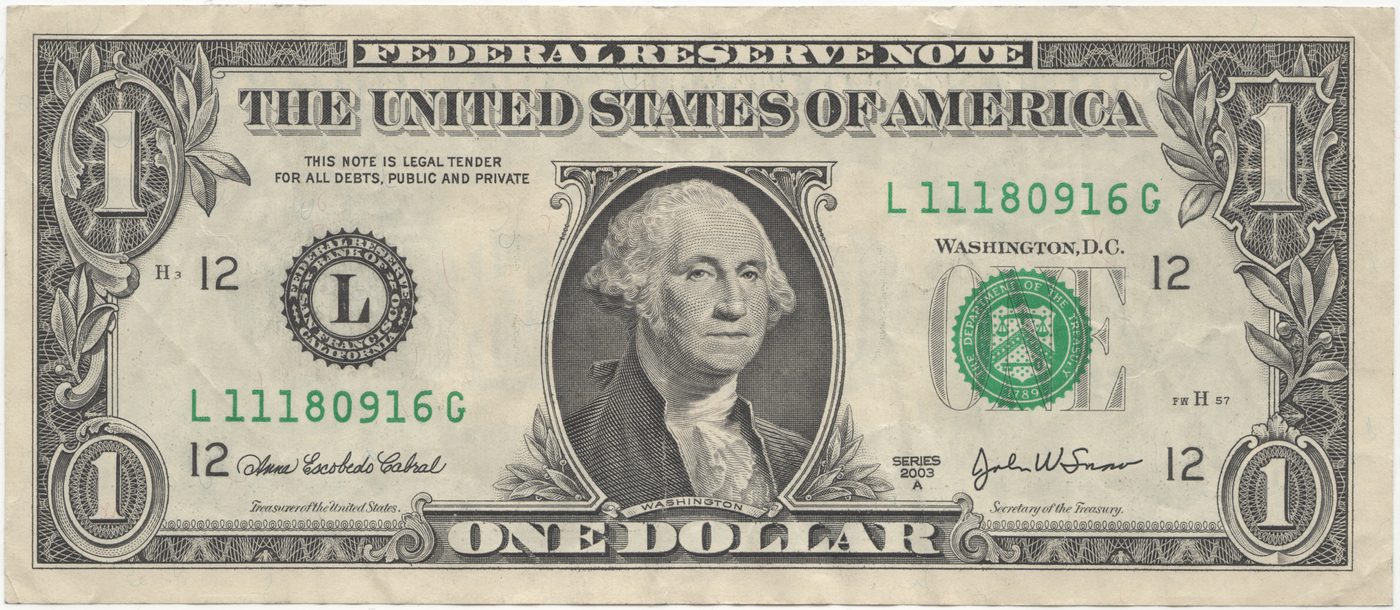
In the first week of October 2026, two dollars went onchain, and they had almost nothing in common except the word “dollar.”
Roughrider Coin — October 1
A dollar token for interbank payments among North Dakota banks and credit unions, running as a permissioned asset on Solana’s public blockchain. Sponsor: the Bank of North Dakota. Issuer: VersaBank USA. Platform: Fiserv. Wallets: Fireblocks.
USDT on Bitcoin — October 2
Tether’s USDT reported as returning to the network it launched on in 2014, through a startup called Utexo, using the RGB token standard with client-side validation. “It’s coming home,” said Tether CEO Paolo Ardoino.
Both launches will be filed under the same heading: “a dollar on a chain.” Only one of them can be switched off.
The short version
1) On Solana the chain is a ledger of accounts with balances — there is something to reach into, so a freeze is possible.
2) On Bitcoin coins are UTXOs — no persistent account, so the switch has nowhere to attach, and enforcement becomes a list that others must honour.
3) In both designs the token moves instantly and the money still settles in a daily batch. The fast part is the receipt, not the cash.
What actually launched
Roughrider Coin runs as a permissioned asset on Solana’s public blockchain, and four parties built it. The Bank of North Dakota (BND) — the only state-owned bank in the country — sponsors it and, in its own words, “will provide governance in an oversight role.” VersaBank USA National Association, the OCC-chartered US subsidiary of Canada’s VersaBank, issues it and handles minting, burning, custody and reserves. Fiserv runs the platform and operates the Commercial Center online-banking system that banks already use. Fireblocks supplies the tokenisation and wallet infrastructure.
More than 90 North Dakota banks and credit unions can access it. Participation is voluntary and limited to financial institutions; individuals and businesses do not hold it. Read that number carefully. North Dakota itself counts 61 FDIC-insured institutions and 29 federally insured credit unions — 90 in total — so “90 can access” is a measure of access, not of use.

USDT, meanwhile, is going back to where it started. Tether first launched on Bitcoin in 2014 on the Omni Layer, then migrated to Ethereum and Tron. The rail for the return is RGB, a standard from a startup called Utexo, founded in 2025, which holds a commercial license to issue USDT on Bitcoin and use its trademark for distribution. Tether co-led a $7.5 million seed round announced in March 2026, alongside Big Brain Holdings and Portal Ventures; Franklin Templeton, Maven11 Capital, Fulgur Ventures, Auros Ventures and Flow Traders also participated.
An account and a coin
There is a structural difference between the two designs, and it is not speed, and it is not cost. It is the shape of the ledger.
On Solana — as on Ethereum and Tron — the chain is a ledger of accounts with balances. Every holder has a persistent address, and the state attached to that address can be reached in and changed by whoever holds the authority. That persistence is exactly what makes a freeze possible. There is a thing to freeze.
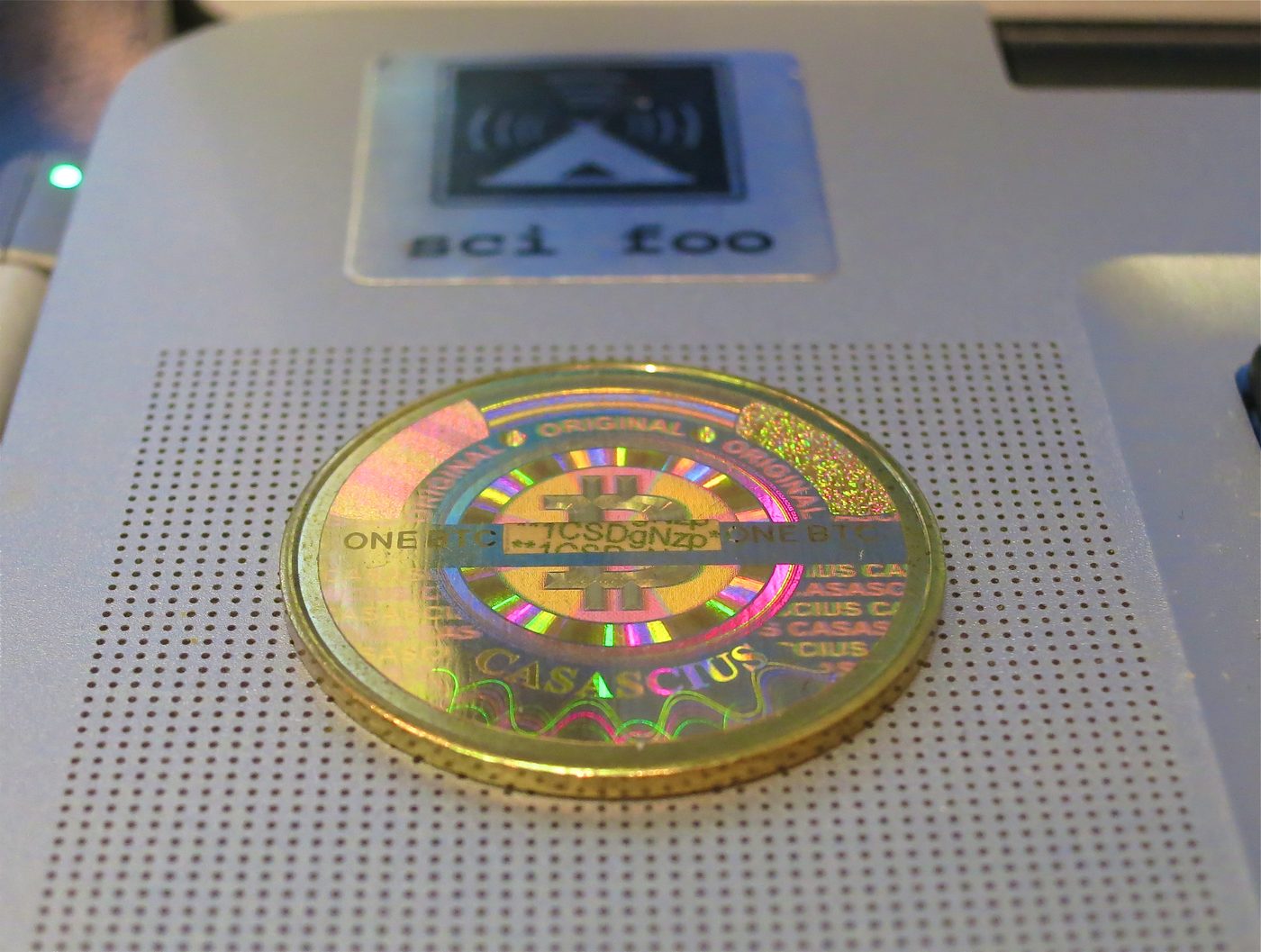
On Bitcoin, coins are discrete unspent transaction outputs, or UTXOs. “Ownership” is not a row in a table; it is knowing which output you can spend next. There is no persistent account, so there is nothing for a freeze authority to attach to. As Utexo co-founder Viktor Ihnatiuk put it, on an RGB output there is no address to act against at all.
A switch needs something to attach to. Accounts give you one. UTXOs do not.
Everything else in this story — the clawback authority, the blacklist, the incompatibility between privacy and programmable compliance — follows from that single fact. The chain was never the interesting part.
Two ways to build a switch
Solana’s off switch is not a policy. It is a standard. Token-2022, also called Token Extensions, is a backward-compatible superset of the original SPL token program. Extensions are appended to a mint or a token account at creation — and most must be chosen at mint creation, because you cannot retrofit them later. Four of them matter here:
- 1) A freeze authority, which can freeze any token account.
- 2) A permanent delegate, which can transfer or burn tokens from any account without the holder’s signature — the Solana equivalent of Tether’s destroyBlackFunds. It is seizure, not just suspension.
- 3) Transfer hooks, which route every transfer through a custom program for allowlist or restriction checks.
- 4) Default account state, which starts new accounts frozen until they are approved.
PYUSD and Paxos’s USDG already use Token-2022 on Solana. Roughrider’s freeze and clawback capabilities come from the same place.
Bitcoin’s version is weaker in a way that is easy to miss. On an RGB output there is no address to freeze, so Utexo cannot do what Tether does on Ethereum. What it will do instead is maintain a blacklist of UTXOs linked to sanctioned or illicit activity and share that list with exchanges, wallets and payment providers, which must then decline to accept them.
“The UTXO will just become unredeemable, so nobody would be able to send it back to a bridge or minting tool.”
Viktor Ihnatiuk, co-founder of Utexo, to CoinDesk
That makes enforcement a matter of cooperation, not command. And it leaves an open question: where does a court order land? Tether is already being sued over an earlier $42.4 million USDT freeze it carried out on a transparent chain. Scale, meanwhile, is not in doubt. USDT supply is roughly $184–190 billion, with about $92.7 billion on Tron and $73.4 billion on Ethereum. As of July 2026, Tether had blacklisted 9,597 addresses on Ethereum and Tron, freezing about $5.69 billion.
| Roughrider Coin | USDT on Bitcoin (Utexo) | |
|---|---|---|
| Chain and data model | Solana public chain, permissioned asset; account model | Bitcoin; UTXO model via RGB, client-side validation |
| Who may hold it | Financial institutions only; 90+ North Dakota banks and credit unions can access | Any wallet that integrates Utexo’s tooling; 450+ businesses have expressed interest |
| Where the off switch lives | Onchain: freeze authority and permanent delegate from Token-2022 | Offchain: a cooperative blacklist of tainted UTXOs shared with counterparties |
| When the money actually settles | Token finality in moments; underlying dollars net once daily via ACH against a BND concentration account | Not stated; launch framed for October 2026 with no date, cost, or issuance size |
| What the sponsor has disclosed | Parties, mechanics, and a one-cent versus $2–$35 wire comparison; no volume, senders, or realized savings | Partners and a $7.5M seed round, three planned services; no launch date, cost, first-issuance size, or committed exchanges |
The conflict in the standards
A design that offers both privacy and an off switch sounds like a feature list. It is a contradiction, and the standards say so out loud.
Token-2022 includes confidential transfers, which use ZK-ElGamal encryption to hide amounts while optionally letting an auditor key decrypt them. It also includes transfer hooks. The two cannot be enabled on the same token. A hook has to read the transfer amount; in confidential mode the amount is encrypted. Privacy and programmable compliance do not compose. It is not a matter of engineering effort. It is a conflict in requirements.
The same conflict reappears on Bitcoin in a different shape. RGB delivers privacy by keeping payment details between sender and receiver, leaving only a fingerprint on the chain, with ownership anchored to UTXOs. It pays for that privacy by giving up the freeze, and replaces it with a blacklist that only works if counterparties cooperate.
And there is a legal floor under all of this. The GENIUS Act, enacted July 18, 2025, requires every permitted payment stablecoin issuer to maintain “technical capabilities, policies, and procedures to block, freeze, and reject specific or impermissible transactions.” In the United States, the ability to freeze is not a feature. It is a prerequisite for issuing a dollar stablecoin. The Act also expects foreign issuers to be able to freeze and seize on lawful orders. FinCEN and OFAC proposed implementing rules in April 2026, targeting full effect by January 18, 2027.
The law is technology-neutral about how you freeze. It is not neutral about whether.
The money still moves once a day
Here is the part of Roughrider that deserves more attention than the word “stablecoin” gets.
A bank first moves funds from its operating account into a designated “for benefit of” account at VersaBank. Only after that transfer is confirmed can tokens be minted, backed one-to-one by dollars. When a token reaches the receiving institution’s wallet, a smart contract burns it automatically on arrival — a design meant to keep token balances low.
So the token is burned on arrival, and the dollars never leave the banking system. Movements across participants’ VersaBank custody accounts are netted daily against a concentration account held at the Bank of North Dakota, which pushes and pulls ACH files among them. The on-chain transfer is final in moments. The money behind it still moves on the old rails once a day. The fast part is the receipt, not the cash.

That design has a second consequence. Because tokens are burned on arrival, the on-chain balance stays low by design, which means an outside observer cannot verify backing from Solana data alone. A bank examiner who can see both the token record and the account ledger can. Everyone else is trusting a number they cannot check.
Then there is the label. Fiserv calls Roughrider a stablecoin. Bank of North Dakota’s deployment page calls it a “dollar-backed token deposit” and says the programme follows the GENIUS Act framework. VersaBank’s release, filed with the SEC, calls it “a U.S. dollar-backed stablecoin designed exclusively for bank-to-bank payments.” Those are not three descriptions of one instrument. Under the GENIUS Act, a payment stablecoin and a bank’s tokenised deposit are different instruments with different claims behind them. And nobody says which instrument a receiving bank holds in the moment between the burn and the ACH credit.
What was not disclosed
Roughrider published access, not use. We know 90-plus institutions can reach the token. We do not know payment volume, the count of active senders, or any list of active users. BND’s own comparison prices a transfer at about one cent against $2 to $35 for a wire, but the launch materials publish no measured realized savings and no performance-testing methodology. A price comparison is a model. It is not a result.
USDT-on-Bitcoin published intent, not terms. The launch is framed for “this month” — the third window given, after July and mid-September slipped. Not disclosed: the date inside October, the size of the first issuance, what a transfer will cost, and which exchanges have committed. More than 450 businesses including exchanges and wallet providers have expressed interest, and talks with larger institutions including Morgan Stanley were mentioned but not confirmed. Interest is not integration.
Both of these are announcements with a design attached. And one of the two contradicts a legal requirement it is nominally built under.
The useful way to read both launches is to stop asking which chain won and start asking where the off switch physically lives. Roughrider put it in the token standard, on a ledger that keeps accounts, and the freeze is a single call. USDT on Bitcoin could not, because RGB has no account to reach into, so it moved enforcement off-chain into a list that only works if everyone honours it. Neither design is confused. Each one made a trade.
Privacy and enforceable control are a trade, not a feature list. You can have the freeze or you can have the freedom, and the engineering will not pretend otherwise for long.
And the last thing worth remembering is the least glamorous. The part of a “stablecoin rail” you can actually verify is usually the part that still runs on the old rails once a day.
Sources
Where each claim came from
- ▸ Roughrider Coin — Fiserv / Bank of North Dakota launch material, reported by Crypto Briefing, Blockonomi and Fintech News (1 October 2026)
- ▸ USDT on Bitcoin — Utexo, RGB and the tainted-UTXO blacklist, as reported by CoinDesk, Crypto Briefing and BeInCrypto (2 October 2026)
- ▸ Token-2022 extensions and the confidential-transfer / transfer-hook incompatibility — Solana token documentation
- ▸ GENIUS Act freeze requirement and the FinCEN / OFAC proposed rules — statutory text and agency proposals
All photographs in this article are reused under their original public-domain, CC0 or Creative Commons licences and are credited in each caption.
(The End)


