

The best-performing large-cap token of the past twelve months is not an AI play, not a Layer-2, and not a memecoin. It is Zcash — a privacy coin whose core technology went live in October 2016, back when most of today’s top-100 tokens were whitepapers, if that.
The numbers: ZEC spent roughly three years pinned near $50. One tweet from Naval Ravikant on October 1, 2025 — “Bitcoin is insurance against fiat. ZCash is insurance against Bitcoin” — added 60% in a day and carried it to about $650 within six weeks. A bear slide took it back to ~$200 by March 2026; May brought $690. Then June: a mintage vulnerability disclosed in the Orchard shielded pool erased more than 60% in 24 hours, down to roughly $250. Then the recovery: an ETF, an upgrade called Ironwood, and this week’s run from $1,370 on Tuesday (The Block) to an intraday all-time high above $1,600 on Wednesday (CoinDesk), up 88% on the month per CoinGecko.
Everyone spent 2025 watching ETF flow dashboards and compliance rulebooks. Meanwhile a ten-year-old privacy protocol quietly assembled the strangest twelve months in crypto: a viral tweet, a counterfeiting bug, a lockbox, a first-of-its-kind ETF, a historic short squeeze. I’ve written code for twenty-some years, and the price is the least interesting part of this story. What’s interesting is what the protocol did to itself along the way.
How We Got Here, in Five Moves
Around it all: Multicoin disclosed a large ZEC position; Winklevoss-backed Cypherpunk bought 200,000+ ZEC at a ~$245 average, targeting 5% of supply; Vitalik Buterin — twice a donor to Zcash’s Shielded Labs — called it one of crypto’s most principled privacy projects. That’s the setup. Now the part price coverage skips.
What NU7 Actually Changes
NU7 activated on testnet on October 4, 2026, at 18:21:45 UTC, block 4,465,026 — earlier than estimated. Mainnet targets November 5, pending an October 20 review that sets the activation height. A disclaimer before the spec talk: I have not audited the implementation; this is an engineer’s reading of the Foundation’s summaries and governance records, not a security review. Four changes matter:
A protocol’s willingness to break backward compatibility, to knowingly strand its oldest users rather than carry dead code at the consensus layer forever, is a sign of maturity, not recklessness. Most chains pick the long pain: legacy pools kept alive “just in case,” old formats supported forever, technical debt compounding where fixes cost most. Zcash picked the short pain. Twenty years of paying down technical debt says: the long pain isn’t safer. It’s just slower.
The June Paradox
Here is the part I find genuinely beautiful. Why couldn’t Zcash just patch the bug and move on? Because of the property that makes Orchard valuable. On a transparent chain, a supply-integrity bug is an accounting problem: count the coins, find the counterfeits, quarantine them. On a shielded chain, Orchard’s privacy meant nobody — not even its own developers — could prove that no counterfeit ZEC had been minted during the vulnerable window.
You cannot audit what you cannot see — including your own supply. The feature that hid users from attackers also hid the damage from the healers.
So Ironwood did the only honest thing available. The turnstile doesn’t try to answer the unanswerable question — which coins are fake? It sidesteps. An engineering answer to a question cryptography refused to answer.
The epilogue is better than the mechanism. On October 1, ZEC holders approved $8.39M of retrospective funding across 17 proposals — including $1.5M for Taylor Hornby, the researcher who found and disclosed the mintage vulnerability. A community that pays its doomsayer seven figures for breaking its newest pool has learned something most ecosystems never learn. Most chains fund audits that find nothing and lawyer up against researchers who find something.
The Compliance Paradox
Now the regulatory board — the real story lives there. Monero made privacy mandatory. Result: delistings across European exchanges, and a date with the EU’s AMLR, which bans anonymity-enhancing cryptos from July 2027. Zcash makes privacy optional — the transparent ledger is the default; shielding is a choice. Result: America’s first spot privacy-coin ETF, an SEC investigation into the Zcash Foundation closed in January 2026 with no action after nearly two years, lobbyists in Washington, serious people floating ZEC as the compliance-compatible privacy asset.
| Monero | Zcash | |
|---|---|---|
| Privacy design | Mandatory — every transaction hidden | Optional — transparent by default, shielding opt-in |
| Regulatory record | Delisted across European exchanges; banned under AMLR from July 2027 | First US spot ETF; SEC probe closed in January 2026 with no action |
| Institutional path | None — the compliance walls hold | Grayscale ZCSH on NYSE Arca, past $460M and growing |
| What got priced | Privacy as a religion | Privacy as a product feature |
Note that this is not clever lawyering. It’s a design decision from 2016 paying off a decade later. The market is not pricing in that privacy won. It is pricing in that privacy with an off switch won. Regulators can coexist with a feature. They cannot coexist with a religion. Whether that counts as a victory for privacy is for philosophers; as an engineer I’ll just note that a system that survives gets to keep existing — and Zcash has both survival and principles because it ranked them in that order.
Industrial Capital, With an Asterisk
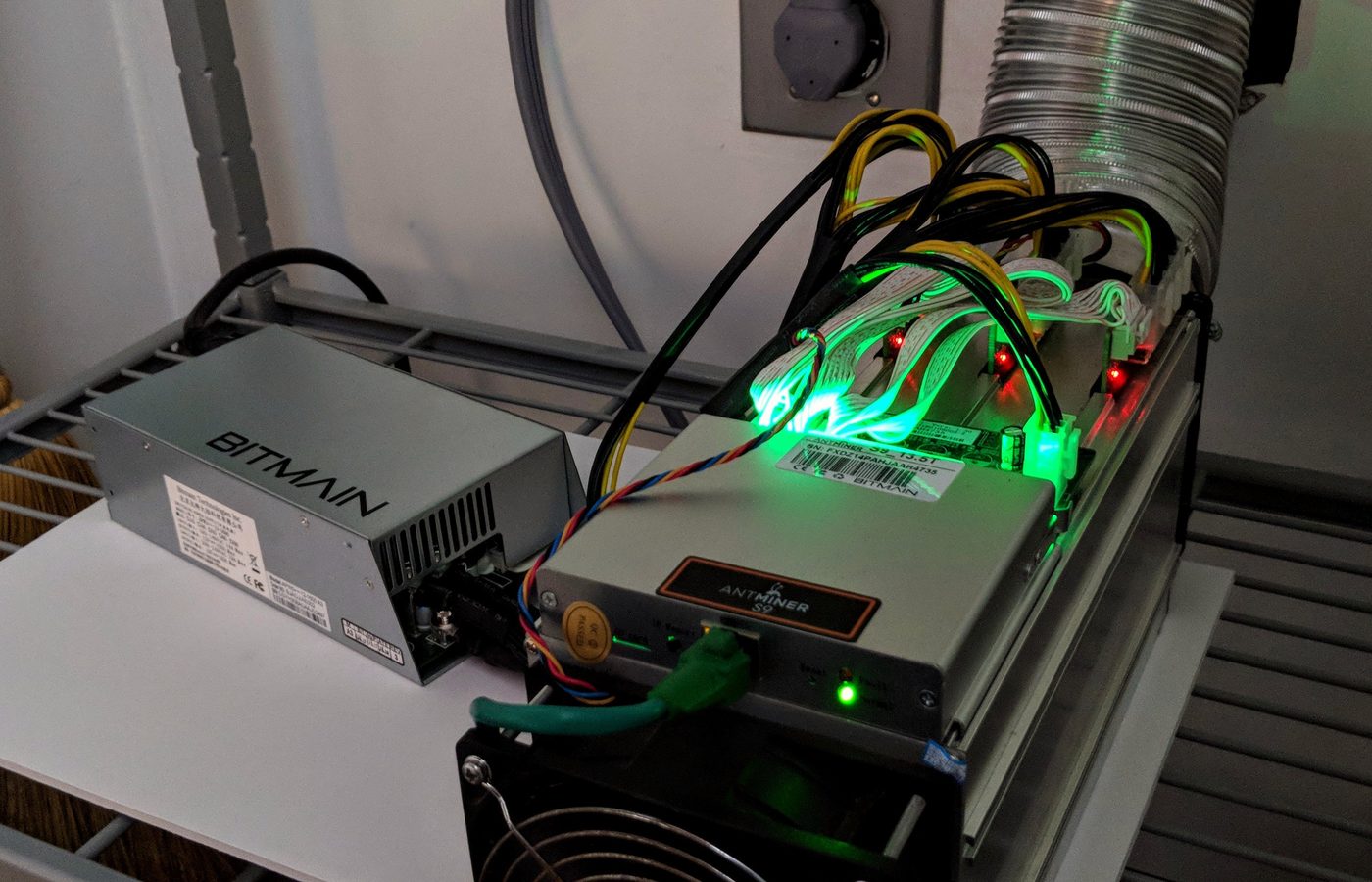
October 5, via Business Wire: Fortitude Mining signed a letter of intent with BITMAIN for priority allocation of next-generation Zcash miners — unreleased hardware — with non-binding purchase commitments of up to $100M.
An honest reading: an LOI is a press release in a contract’s clothes, and “non-binding” plus “up to” do most of the work. Look at the deposit mechanics. Fortitude must post 20% — $20M, refundable — drawn from parent DCG’s credit line, raised from $50M to $70M for this. DCG is expected to lend it in ZEC, meaning Fortitude sells that ZEC on the market for cash to fund the deposit. Sit with the loop: the headline says miners are going long on Zcash; the mechanics involve selling it. DCG gets distribution through a mining subsidiary while the release reads “adoption.”
That said, two facts here are hard. Fortitude already ordered 9,000 Antminer Z15 Pro units in July — about $31.5M, adding 7.56 GSol/s to the ~4.7 GSol/s it runs across seven sites and 60MW of contracted power. Real capex, real Equihash hashrate. The thesis is explicit: DCG’s Barry Silbert has said ZEC could eventually reach 5-10% of Bitcoin’s market cap. At $1,600 that implies either a lot of buying or a lot of headline-writing — the next year will show which.
One more thing: the machines come from Bitmain — the company that turned Equihash ASIC in 2018, after it was marketed as ASIC-resistant. When the firm that once broke your mining egalitarianism takes priority orders for your next generation, industrial capital isn’t arriving. It already arrived, and it’s signing the lease.
What I Actually Think
OK, news covered. My own reading, for what it’s worth:
- Don’t mistake a 30x for a verdict on the technology. What moved the price: record open interest, a $34.5M liquidation Friday, a one-directional ETF pipe, a supply narrative. Shielded pools — actual privacy usage — crossed 30% of total supply only in early August: real adoption at an all-time high, still lagging the price by a mile. When leverage is the loudest voice in the room, price is a sentiment indicator, not a technical audit.
- NU7’s real signal is governance, not block times. 99.9% approval on 25-second blocks; roughly 2.4M ZEC voting, about 66% of eligible balances; 98.9% to keep the halving; 96.6% on reissuance timing; $8.39M of retrospective pay, including a bounty for the researcher who broke the protocol. Anyone can ship an upgrade. Very few communities can vote near-unanimously to freeze their own genesis pool, then pay the person who found the flaw. That is the maturity signal — the only thing on this list that compounds.
- The risk list, honestly. Execution first: October 20 is a review, November 5 is a target, and neither is final — holders just watched what one bug does to this price. The Sprout freeze has a PR bill coming; “Zcash is deleting coins” writes itself, and some stranded coins are a certainty — the question is how loud the loudest stranded holder gets. AMLR still lands in July 2027, and “anonymity-enhancing” is a political category, not a technical one. And the price sits at an all-time high — good news is in the price; execution is not.
One closing thought. In distributed systems, hiding the data was never the hard part. That’s the easy ten percent. The hard part is proving — to strangers, to regulators, to your own future self — that what you hid is still true. Zcash spent a decade proving it could hide, and it spent 2026 learning, in public, at $50 and at $1,600 alike, that a privacy system which cannot prove its own honesty is just a secret with a price tag. The turnstile, the fee recycling, the frozen Sprout pool, the paid bounty — that is a protocol doing its homework after nearly failing the exam. Privacy that can prove its own honesty is the only privacy that gets to survive. Whatever ZEC does next week, that lesson was worth the tuition.
(The End)
Image licensing note: the three photographs are reused from Wikimedia Commons under CC BY-SA 4.0 (Marco Krohn), CC BY 4.0 (Kidfly182) and CC BY-SA 2.0 (Steve Rainwater), with full attribution in each caption. Share-alike terms apply to derivative works of the images themselves, not to this article.


