

Conclusion first: the newest category of blockchain is not a technology looking for a use case, it is a settlement network built by the party that issues the money. Circle has Arc, Stripe has Tempo, the Tether-aligned camp has Plasma and Stable, and a consortium of 21 banks is building its own. Read any of them through the validator list rather than the roadmap and the description becomes plain: a small, permissioned set of institutions running a shared ledger, optimised for compliance and throughput, with a stablecoin as the gas token.
Four chains, one per issuer
The alignment is the story before the technology is. Tempo was announced in September 2025 by Stripe and Paradigm with a $500 million round at a $5 billion valuation, went live on mainnet on 18 March 2026, and takes a deliberately multi-issuer approach: its TIP-20 standard lets gas be paid in USDC, USDB, pathUSD and others, and its first external validators arrived in April 2026 with Stripe, Visa and Zodia Custody among them. Arc is Circle’s USDC-native chain, which opened a public testnet in October 2025 and mainnet on 16 September 2026, pays gas natively in USDC, and runs on Reth with Malachite consensus; Circle completed a 10 billion ARC genesis mint as a technical milestone rather than a sale, and plans a move from proof of authority to proof of stake in 2027. Plasma is the Bitcoin-anchored EVM chain in the Tether and Bitfinex orbit, with a native XPL token and a protocol-level paymaster that makes plain USDT transfers free, live in public beta since 25 September 2025 with more than $2 billion of day-one liquidity, and now carrying USDC and EURC natively after Circle’s August 2026 integration. Stable, from the same Bitfinex orbit, goes one step further and makes USDT0 itself the gas asset, with mainnet from 8 December 2025.
| Chain | Aligned with | Mainnet | Gas |
|---|---|---|---|
| Tempo | Stripe and Paradigm | 18 March 2026 | Multiple stablecoins via TIP-20 |
| Arc | Circle | 16 September 2026 | USDC |
| Plasma | Tether and Bitfinex orbit | Public beta 25 September 2025 | Protocol paymaster for USDT |
| Stable | Bitfinex, Hack VC | 8 December 2025 | USDT0 |
Read the validator list, not the roadmap
Arc’s founding validator cohort is the clearest statement any of these projects has made about itself: BlackRock, DTCC, Galaxy, Global Payments, ICE, Mastercard, MoneyGram, SBI Group, Standard Chartered, Sumitomo and Visa. That is a list of institutions, chosen rather than competed for, and it is permissioned at launch with decentralisation described as a later phase. Tempo runs a similar structure, opening to external validators in April 2026 with Stripe, Visa and Zodia Custody. The design priorities follow from the list: deterministic finality measured in sub-second terms, compliance tooling, predictable throughput, and no particular claim of censorship resistance.
Analysts at Delphi Digital called this a war over stablecoin settlement rails, and the sceptical version of the same observation is that these are consortium databases with better engineering. Both descriptions are compatible. What is genuinely new is not the trust model, which is still a small set of named institutions, but the settlement properties: continuous operation, programmable transfer conditions, and collateral that can move without a correspondent bank in the middle.

The motive is the toll, and Tether’s decision explains the market
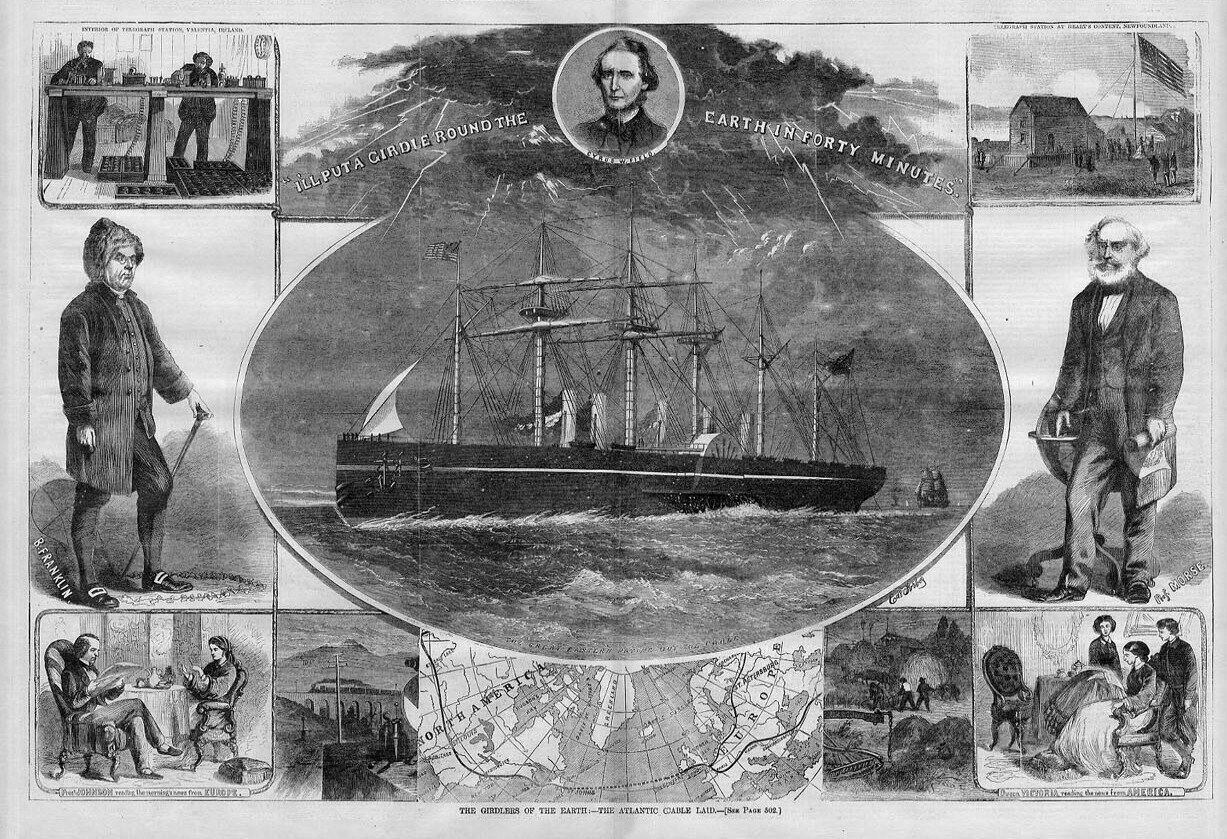
Issuers build these chains for the same reason telegraph companies laid cables: whoever owns the rail collects the fee for every message. The number is not small. USDT holders pay roughly $2.9 billion a year in fees to the external chains that carry their transfers, which is revenue a token issuer can capture by owning the transport layer instead of renting it.
The instructive fact is who declined to do that. Tether is not building a blockchain, and its chief executive, Paolo Ardoino, denied the widespread assumption directly in August 2026, saying the company remains transport-agnostic and supports different protocols for its stablecoins. Tether backs Plasma and Stable, raised roughly $373 million in a Plasma token sale, and keeps its distance from owning the rail — which means it is deliberately forgoing toll revenue to preserve distribution across Tron and Ethereum, where most USDT supply already lives.
That is the economics of the category in one decision. For an issuer whose token is already default money on other people’s rails, the marginal value of owning a new chain is smaller than the risk of fragmenting where its token already circulates. For issuers competing with it, a proprietary chain is a way to control settlement terms, capture fees and negotiate with counterparties from a position of ownership. The same logic explains why the chains are one per issuer rather than one for the category.
The banks are building the same thing with more paperwork
Banks are converging on the same architecture. On 1 September 2026 a group of 21 banks — including Bank of America, Citi, Fidelity, Goldman Sachs, Wells Fargo, Deutsche Bank, UBS, PNC, Scotiabank and TD — announced an intention to form a jointly owned company issuing a dollar-backed stablecoin, compliant with the GENIUS Act and MiCA, targeting a close in the second half of 2026 and a launch in the first half of 2027. A parallel effort, the BankChain Alliance, claims 39 state banking associations representing roughly 3,000 banks behind an industry-owned network aimed at a 2027 launch. JPMorgan has been reported weighing its own token alongside its existing tokenized deposit system.

The smallest version of that pattern is the most concrete one. Bank of North Dakota’s Roughrider Coin went live on 1 October 2026, built on Fiserv’s digital asset platform with VersaBank as issuer handling minting, burning, custody and reserves, and designed for bank-to-bank payments across more than 90 North Dakota banks and credit unions, with Solana and Fireblocks in the stack. That is not a consumer payment network. It is a state-level clearing arrangement with a token in it, and it is a better model for what bank chains will look like than anything in a consortium press release.
What actually decides this
The category’s economics are already visible through the fee-free transfers and the validator lists: nobody is competing on decentralisation, and everybody is competing on who brings the volume. Stablecoin transfers run at roughly $400 billion a month by several estimates, with about 60 percent of that business-to-business, which means the buyers are companies and the deciding factors are settlement finality, integration cost and which of their counterparties accept the rail.
That is why the interesting question is not which chain is technically best. It is what happens when a chain owned by one issuer carries a competitor’s coin — Arc settling USDC while BlackRock deploys its tokenized treasury fund there, Plasma carrying Circle’s EURC, Tempo accepting several issuers’ dollars as gas. Neutrality in a network owned by a participant is a governance promise rather than a technical property, and the promise is only as durable as the owner’s incentive to keep it. Watch the fee schedules, the validator lists and who is allowed to mint, and the winner will be identifiable long before any of these chains is decentralised.


