


The best accountant in the world keeps a perfect ledger — and he is blind
A blockchain can prove everything on its own ledger and nothing about the world outside it. The person who whispers the outside world in is the oracle.
Here is a puzzle I have never been able to shake. A blockchain can prove, with mathematical certainty, every single thing already written on its own ledger — every transfer, every balance, every rule. You cannot make it lie about what it recorded. Now ask it the dumbest question in finance: what does one ETH cost in dollars, right now? It has no answer. The ledger does not know. Someone has to open the door and tell it.
That someone is an oracle — and the moment you realize the oracle is a person (or a small group of people) standing at the edge of a supposedly trustless machine, you understand both the most important piece of DeFi infrastructure and its single greatest weakness.
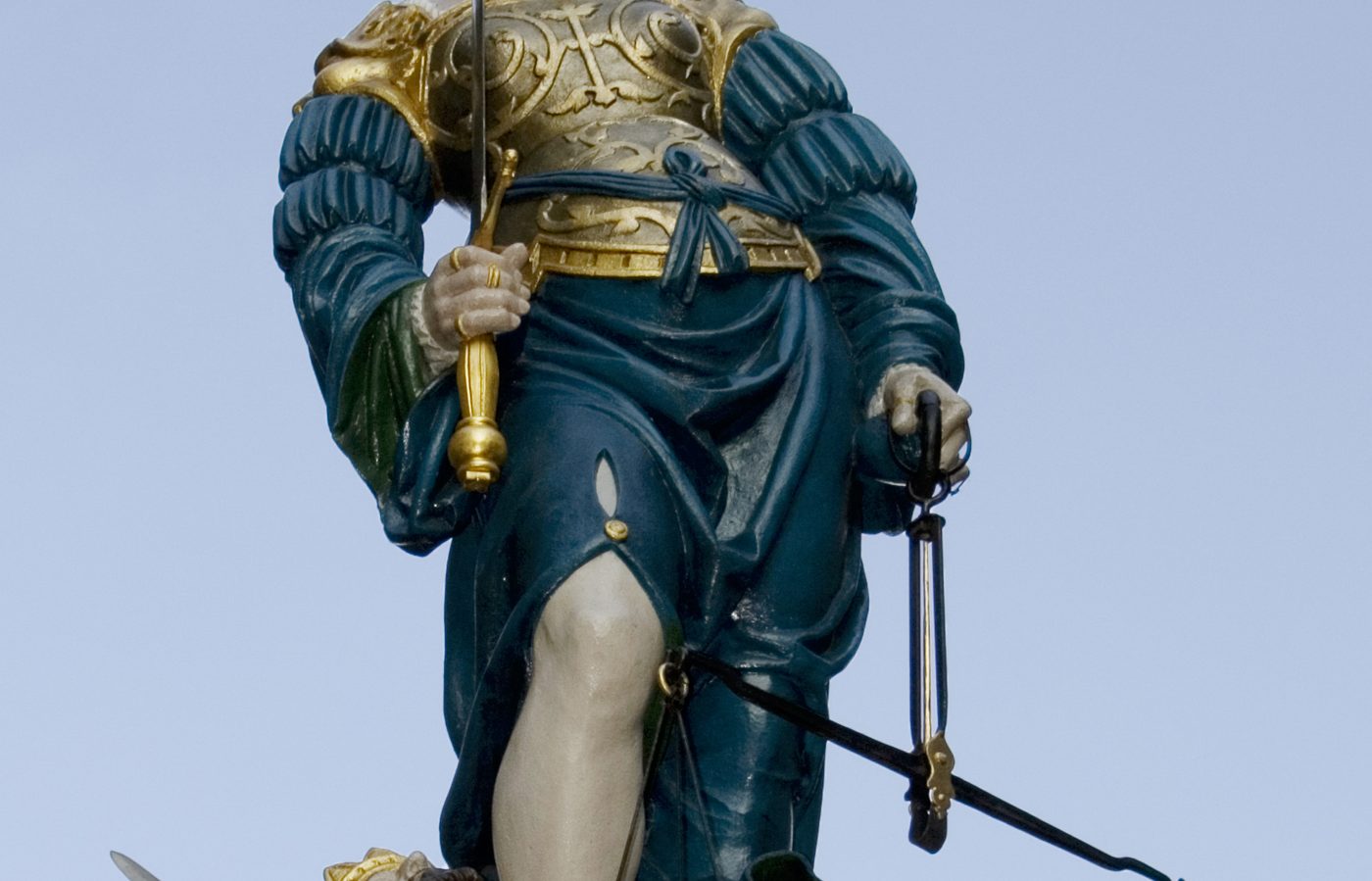
The oracle problem: determinism has a wall
A blockchain’s whole job is to be deterministic. Every node has to arrive at the same result from the same inputs, or there is no consensus. That is exactly what makes it trustless — you do not have to trust anyone, because you can re-run the math yourself.
But determinism comes with a hard wall. A smart contract can read anything already on-chain — balances, timestamps, token supply. It cannot reach outside. It cannot call a stock exchange’s API, check a football score, or read a bank statement, because if it did, two nodes might get two different answers a second apart, and the chain would split in half.
So every blockchain faces the same gap. It has a name: the oracle problem — how does a deterministic machine learn a fact about a non-deterministic world, without letting someone slip a lie through the door?
# A lending contract must decide whether to liquidate a loan.
# It cannot leave the chain to fetch a price. So it asks:
price = oracle.report("ETH/USD")
# The contract trusts the answer completely.
# The entire security question is: who is "oracle"?
Read that last line twice, because it is the whole article in one comment. The contract is not the risky part. The risky part is the word “oracle”.
What an oracle actually is — and the kinds it comes in
An oracle is not a crystal ball. It is a piece of infrastructure that fetches off-chain data and publishes it on-chain, so a smart contract can consume it. Strip away the mystique and it is a courier carrying a signed note.
The most common kind by far is a price oracle — the thing that tells a lending market what ETH is worth so it knows when to liquidate a loan (I walked through that liquidation arithmetic here). But oracles also deliver:
- Randomness — a lottery or a game needs a number nobody could have predicted.
- Proof of reserve — does a stablecoin issuer actually hold the collateral it claims?
- Real-world outcomes — election results, weather, sports scores, insurance events.
All of them share one structure: something outside the chain is true, and a courier carries that truth inside.

One courier is a single point of failure
The simplest oracle is centralized: one company, one API, one answer. It is fast and cheap — and it is exactly one bribe, one hack, or one outage away from lying to the entire protocol.
| Centralized oracle | Decentralized oracle network | |
|---|---|---|
| Who answers | One entity, one API | Many independent nodes |
| Point of failure | Single (bribe, hack, downtime) | Must corrupt a majority at once |
| Speed / cost | Fast, cheap | Slower, more moving parts |
| Trust model | Trust the company | Trust the majority, not any one node |
The fix is to stop trusting one courier and start convening a jury: a decentralized oracle network (DON) — many independent nodes, each pulling from different sources, whose answers are combined into a single on-chain number.
A jury, not a witness: the three layers of aggregation
Here is how a serious decentralized oracle (the reference implementation is Chainlink) turns raw market noise into one trusted number. It is the same trick repeated three times — aggregate, then aggregate again — and the repetition is the security.
Three medians, three layers, one idea: no single person, server, or source gets the last word. To move the price, an attacker has to corrupt a majority of independent operators at once.
Cross-examination: what happens when the witness lies
This is the part I want you to actually feel, because it is where the metaphor stops being a metaphor. Every few years, someone forgets the lesson and trusts one thin witness, and the result is always the same shape. The cleanest case is Mango Markets, October 2022.
$116M — drained from Mango Markets on Oct 11, 2022
A trader — later identified as Avraham Eisenberg — took both sides of a giant perpetual-futures position on MNGO, the protocol’s own governance token. Then he bought MNGO on the thin spot market, driving its price from $0.03 to $0.91. The protocol’s oracle dutifully reported that pumped number as fact. Because Mango used that feed to value collateral, Eisenberg’s inflated position suddenly looked like enough collateral to borrow — and withdraw — roughly $116 million of other crypto.
Notice what was not hacked: no smart contract. The code executed perfectly. The oracle reported a price, the code trusted it, and the code destroyed itself. The witness lied, and the blind judge signed the verdict without a flicker of doubt.
The same skeleton shows up across DeFi’s history — Cream Finance (about $130 million, October 2021) and PancakeBunny (May 2021) among them. The common thread is never a broken line of Solidity. It is a feed that was too thin, too centralized, or too slow to resist a determined buyer.
So where does trust actually live now?
This is the uncomfortable part. Blockchains sold themselves on the promise of removing trust. Oracles quietly put a small amount of it back in.
A decentralized oracle network does not make trust disappear — it makes it harder to break, by spreading it across many independent witnesses who are paid to be honest and punished for lying. That is a real improvement. But let us not dress it up: at the edge of the chain, you are still believing somebody. The engineering question is only how many somebodies, and how much it costs to buy them all.
So the next time a DeFi protocol shows you a “decentralized” badge and a yield number, ask one question — the only question that matters: who told the chain what the price is, and what would it cost to make them lie? If you cannot answer both halves, you have found where the trust really lives, and it is not in the code.
Definitions and the three-layer aggregation architecture are from the Chainlink documentation (chain.link/education). The Mango Markets manipulation (Avraham Eisenberg, ~$116 million, October 11 2022) is detailed in the SEC litigation release (SEC v. Eisenberg, 1:23-cv-00503) and the ESMA DeFi risks report (October 2023); Cream Finance (~$130 million, October 2021) and PancakeBunny (May 2021) figures from the same ESMA report. Not financial advice.
(The End)


