You can be right about the technology and still lose money on the supply schedule. Here’s the diligence I run before opening a chart
Here’s a confession that took me real money to earn: I once picked a token correctly — the technology was real, the usage was growing, the team shipped — and I still lost 40% of the position. Not because I was wrong about the project. Because I never asked who was on the other side of my trade, and when they were scheduled to arrive.
That loss is what made me learn tokenomics properly. And I want to save you the tuition, because tokenomics is not a price-prediction hobby — it’s the discipline of reading a token’s supply structure before you buy it. How many exist, who holds them, when more arrive, and whether the total can change. None of that tells you where the price is going. All of it tells you what kind of terrain you’re standing on.
The method is four steps. Before that, though, we need a standard to measure against — because “reading tokenomics” means nothing until you define what good disclosure looks like.
The standard: what full disclosure looks like
When I evaluate any token’s documentation, I hold it up against the most boring, best-disclosed monetary asset in existence: Bitcoin. Say what you want about it, but its supply contract is the gold standard of transparency — a hard cap of 21 million, a publicly known issuance curve, no discretionary mint, no insiders with a vesting schedule. Every future coin was knowable on day one.
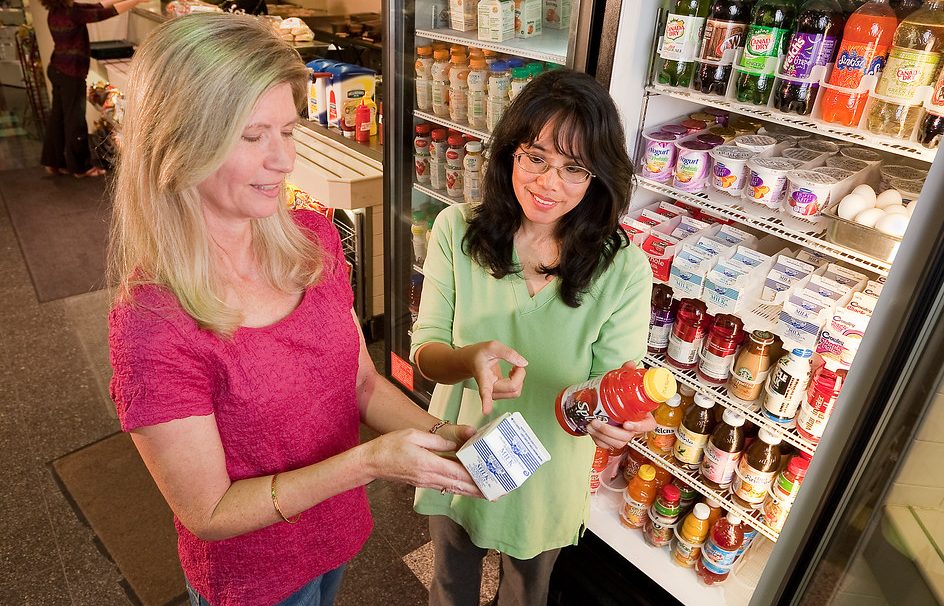
Almost no token meets that bar. That’s fine — a startup token isn’t trying to be a monetary asset. But the gap between a token’s disclosure and that standard is exactly what you’re underwriting when you buy. And here’s the part most people miss: the gap is measurable. Every number in these four steps is public, free, and sitting on a block explorer or unlock dashboard right now. The industry isn’t hiding the label. It’s betting you won’t turn the box over.
To make this concrete, I’ll run one real token through all four steps as we go: Arbitrum’s ARB — a major, well-documented L2 governance token, launched March 2023 with 10 billion tokens. If the method works on a “serious” token, it works anywhere.
Step one: read the serving size
The first number is the one everyone quotes and almost nobody interprets: circulating supply versus total supply. ARB has 10 billion tokens total; roughly 6 billion circulate today. The price you see reflects only the 6 billion. The other 4 billion exist, are counted, and are arriving on a schedule.
The tool for this step is a single division:
Market cap = price × circulating supply | FDV = price × total supply | FDV ÷ market cap = the dilution still scheduled to land on you
Run it on ARB and you get a ratio around 1.65. Translation: at the current price, the market is carrying about 65% more inventory than it has priced in. That’s not automatically a sell signal — but buying at a low ratio is terrain, buying blind at a high ratio is a subsidy to early insiders, and you should know which one you’re doing.
Step two: read the ingredients
Allocation is the ingredient list. ARB’s, at launch: 35.3% DAO treasury, 26.9% team and advisors, 17.5% private investors, 11.6% user airdrop, 7.5% foundation, 1.1% ecosystem DAOs. Insiders and investors combined: 44.4% of the entire supply, acquired at prices a fraction of yours.
Two things to check on any ingredient list:
- The insider share, and its cost basis. Team and investor tokens were bought or granted at seed-stage valuations. You’re bidding against inventory that’s profitable at almost any price.
- What “community” actually means. On memecoins I’ve checked, “community allocation” routinely resolves to a cluster of wallets funded by the same deployer. Read the list against the holder distribution, not against the marketing.
Step three: read the expiry date
This is the step that would have saved me my 40%. Vesting is a supply schedule, and it’s the supply schedule that hits the market while you hold. ARB’s team and investor tokens: a one-year cliff (nothing unlocked until March 2024), then linear monthly unlocks until March 2027 — roughly 1.4% of total supply landing every single month, mostly in wallets whose cost basis is near zero.
Does the market shrug it off? The measured answer: no. Across ARB’s monthly unlock events, the average price move in the following two weeks has been about -13.9%, with individual months ranging from -2% to -39.5%. Not every drop is caused by the unlock — correlation is not a vesting schedule — but a standing monthly date with ~$12 million of near-free inventory is not a headwind you want to discover by surprise.
My rule after the tuition I paid: before holding any token through an unlock window, I want to be able to name 1) the date, 2) the amount, and 3) the recipients. If I can’t fill in those three blanks, I’m not holding a position. I’m holding a coin flip.
Step four: check whether the factory can make more
Last step, the one people skip because it feels paranoid: can the total supply change? Bitcoin’s answer is famously no. ARB’s answer is “not without a DAO vote” — the contract has a mint function, governed by the token holders, with policy capping inflation around 2% a year. Disclosed, bounded, reasonable. But notice what that sentence actually says: the ingredient list on the back of the box can be rewritten after you buy it, by a vote you may not be watching.
On tokens where the mint is owner-controlled rather than DAO-controlled, this step is not paranoia — it’s the whole ballgame. A hard cap with an unrestricted mint function isn’t a hard cap. It’s a press release.
The four-step checklist: Tape this to your monitor
Closing
That’s the whole method. Four steps, maybe ten minutes per token once it’s habit, and every input is public. I still can’t tell you where any price is going — nobody honest can — but I can promise you this much: after running it for a while, you’ll find that most of the tokens that looked exciting at step zero look like what they actually are by step four. Either a real project with priced-in dilution you can plan around, or a beautiful front of box with nothing on the back.
The front will always be more fun. That’s what fronts are for. This method is how you check the back — I hope it saves you the tuition it cost me.
(The End)


