Two traders buy the same coin, in the same app, on the same afternoon. One pays a 0.10% taker fee. The other pays 0.35% — three and a half times as much, on the same order size, inside the same black-and-white interface. The difference is not a VIP tier, a promotion, or a token holding. It is the address printed in their passports.
That gap is the whole review. OKX is not one company. It is a stack of legal entities sharing a brand: Aux Cayes FinTech Co. Ltd in Seychelles, which runs the global platform and pleaded guilty in a US federal court in February 2025; OKX Europe Limited in Malta, which holds the MiCA licence; OKX Inc. in California, built to re-enter the United States; OKX Middle East Fintech FZE in Dubai, under VARA; and OKX Singapore, under MAS.
Which of these companies holds your coins is decided before you download the app — by your address, not by your choice. In 2026, that stopped being fine print and became the product. Here is the map.
One trade, two prices
Start with the receipts, because they are the clearest document the stack produces. Below are two accounts doing the same $10,000 bitcoin buy — a market order, no tiers, no discounts — in the same app:
Same app. Same coin. Same click. The fee differs by a factor of three and a half, and the menu differs too: the European entity delisted USDT because USDT does not meet MiCA’s requirements for e-money tokens, so European accounts trade USDC and USDG instead.
None of this is hidden — both schedules are published, and the European one is not an error. Compliance staff, segregated accounts, audits, a regulator with subpoena power: someone pays for those, and on this exchange the invoice is itemised on the fee page. A company that spent seven years operating without a licence now sells the licence as its premium product — and Europe is the customer paying full price.
Five entities, one logo
Most reviews describe OKX as a thing. It is more useful to describe it as an org chart. These are the companies behind the logo:
| Entity | Based in | What it runs | The paper that matters |
|---|---|---|---|
| Aux Cayes FinTech Co. Ltd | Seychelles | The global platform most of the world uses | A guilty plea — 24 Feb 2025 |
| OKX Europe Limited | Malta | The EEA: spot, custody, payments | MiCA licence — 27 Jan 2025 |
| OKX Inc. | San Jose, California | The US re-entry: spot and wallet only | FinCEN MSB · NMLS 1767779 |
| OKX Middle East Fintech FZE | Dubai | Full VASP, incl. retail derivatives | VARA licence |
| OKX SG Pte. Ltd. | Singapore | Payments services | MAS licence |
The same brand sells retail leverage to a trader in Dubai, refuses it to a trader in London, and offers a Californian a stripped-down spot-only counter. The logo is the only thing these five companies share. Your fee schedule, your stablecoin menu, your leverage, your legal recourse — all of it is set by the entity, and the entity is set by where you live.
The paper trail: Aux Cayes FinTech Co. Ltd
On 24 February 2025 it pleaded guilty in the Southern District of New York to one count of operating an unlicensed money-transmitting business (18 U.S.C. §1960): forfeiture of $420,353,574 plus a criminal fine of $84,457,629 — $504,811,203 in total. The conduct window ran from 2018 to early 2024 despite a US ban on the books since 2017; US customers traded over $1 trillion, of which more than $5 billion was flagged as suspicious. An independent compliance monitor stays in place for two years from the judgment.
The paper trail: OKX Europe Limited
MiCA CASP authorisation from the Malta Financial Services Authority on 27 January 2025, covering nine of the ten MiCA services and passported to all 30 EEA states; it entered the ESMA register the same day as Crypto.com. A MiFID II licence (2025) carries EU derivatives — X-Perps launched under it in April 2026, adding perps on stocks, gold and oil from June 2026. A PSD2 Payment Institution licence followed in February 2026 for stablecoin payments.
The paper trail: OKX Inc.
Incorporated in the United States, headquartered in San Jose. Re-entered the US market in April 2025 as a federally registered money services business, with state money-transmitter licences under NMLS ID 1767779. Spot, buy/sell/convert and the self-custody wallet only — no derivatives, no margin — and no service in New York, Texas and, per its own disclosure, “parts of the United States”.
The entity that pleaded guilty
Begin with the entity most readers of this article are actually contracted to. In February 2025, Aux Cayes — the Seychelles company behind the global platform — admitted, in its own words, that “legacy compliance gaps” had let US customers trade on the global venue. The Justice Department’s version was less gentle: for over seven years, it said, OKX knowingly violated anti-money-laundering law, and an employee even advised an American customer to enter a fake country and a made-up ID number.
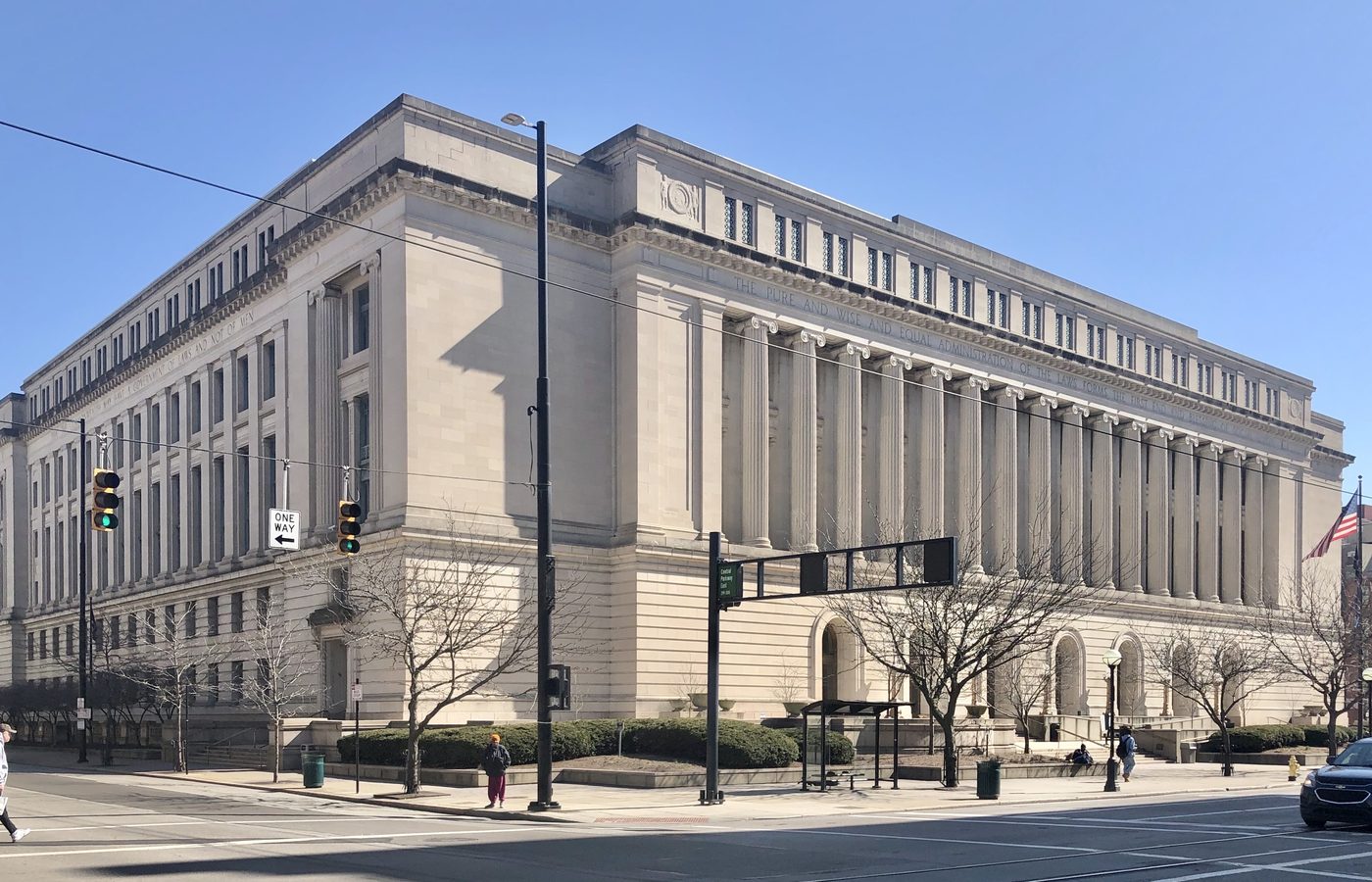
What the plea bought: the exchange kept operating, no customer harm was alleged, and no individual employee was charged. All of that can be true at once. What does not flex is the structure: the default counterparty — the one you get when you download the app and click agree without choosing anything — is the entity with the guilty plea. The external compliance monitor assigned under the settlement reads over its shoulder until February 2027.
The entity that bought the licence — and kept the invoice
Now the premium product. OKX Europe Limited is a Maltese company, and on 27 January 2025 it received its MiCA licence from the Malta Financial Services Authority — one of the first global exchanges to clear the gate. One licence in Valletta, thirty markets. And because MiCA does not cover derivatives, the same entity needed a second licence, MiFID II, to sell European customers futures at all. Three licences, three regulators, one app icon.
The European account also carries rights the Seychelles account does not: client funds segregated from company money, legal liability if the exchange loses your assets, a complaints process with a regulator behind it. Those rights are real — and they are exactly what the first receipt is charging you for. In Europe you are not buying a cheaper exchange. You are buying a licensed one, and the licence is the most expensive line on the menu.
Even the stablecoin menu is jurisdictional. USDT — the most traded token in the industry — does not qualify as an e-money token under MiCA, so the European entity delisted it and routes European users to USDC and USDG. That is not censorship; it is bookkeeping. A stablecoin balance is a claim on an issuer, not a coin in a vault — and the entity you hold the claim through is part of the claim.
The entity built to replace the one that pleaded guilty
The strangest entity in the stack is the youngest. The settlement’s remedy was not only a fine — it was an incorporation. OKX Inc. re-entered the United States in April 2025 as a FinCEN-registered money services business, carrying state-by-state money-transmitter licences. What Americans get:
- Spot trading, buy/sell/convert, the self-custody wallet, and a payments product.
- No derivatives, no margin, no perpetuals — the products that make the global platform famous are not on the US menu.
- No service at all in New York, Texas and, in the company’s own words, “parts of the United States”.
The platform that runs 125x perpetual contracts in Dubai ships a spot counter in California. The country where the venue broke the law gets the safest version of the venue — and the smallest one. That is not a contradiction; it is how the trade-off is supposed to work. Strict rules produce narrow products. Whether you prefer the narrow product or the deep one is a question about you, not about the exchange — which is exactly why no review can answer it for you.
The entities that sell what yours cannot
Dubai is where the stack stops apologising. OKX Middle East Fintech FZE holds a full VASP licence from VARA, including retail derivatives — the company says it is the first global exchange permitted to offer retail perps on a regulated UAE platform. Singapore’s entity runs payments under MAS. Australia’s registration confines derivatives to wholesale clients. The United Kingdom gets neither route: OKX is not FCA-authorised — the regulator has published warnings about the company, including one tied to its Manchester City sponsorship — so a British trader is outside the safety net entirely.
Then there is the list of places no entity serves. The platform’s own compliance disclosure — updated June 2026 — names Afghanistan, Canada, Cuba, Hong Kong, India, Iran, Japan, Malaysia, Nepal, Nigeria, North Korea, Syria, Uzbekistan and the occupied regions of Ukraine. And, oddly at first glance, France. France? The Maltese entity serves France under MiCA; the global entity lists France as restricted for the same reason a hotel lists your own room as occupied — you are supposed to be somewhere else. The restriction list is not a map of where OKX is unwelcome. It is a map of which company is supposed to be serving you instead.
The stack prunes countries the way other exchanges prune products. Thailand’s SEC filed a complaint against the Seychelles entity in April 2025 and ordered ISPs to block the site that June. Hong Kong’s licence application was withdrawn in 2024. Every exit was a jurisdiction, not a feature.
2026: the year the border became the product
Two dates made all of this binding. MiCA became fully applicable on 30 December 2024, with an 18-month transition for legacy venues that ended on 1 July 2026. ESMA confirmed in December 2025 that there would be no extension, and the regulation’s own text closes the loophole: a pending application buys you nothing — transitional permission ends at the deadline or at the licence decision, whichever comes first.
What happened on the far side of that deadline should reorganise how you think about choosing an exchange. By OKX Europe’s own account — hold that phrase — only 17–20% of European virtual asset providers had converted to MiCA by May 2026, about 41% of European crypto app downloads in the prior year went to platforms without a MiCA licence, and roughly 60% of active European users were trading on unlicensed venues. The entity’s chief executive predicted that around 80% of exchanges would not survive the transition.
If even half of that is right, 1 July 2026 was not a compliance date; it was a customer-transfer event. In the twelve days after the deadline, OKX’s European app downloads rose 158% — Sensor Tower’s figure, which made it the most-downloaded MiCA-licensed crypto app in Europe. Regulation did not shrink the market. It redistributed it, toward whoever held the licence early.
Size, for calibration — though the stack makes even that ambiguous. OKX’s own materials say “more than 50 million registered users”; Reuters, covering Intercontinental Exchange’s March 2026 purchase of a minority stake at a $25 billion valuation, put reach at “over 120 million people”. Both numbers circulate; neither is the point. The point is direction: the second-largest derivatives venue on Earth — $2.19 trillion of derivatives volume in the first quarter of 2026, second only to Binance — has decided its growth product is paperwork.
In 2026, “which exchange should I use” quietly became “which regulator do I want to be answerable to.”
Which OKX are you in?
The question people ask — is OKX safe? — cannot be answered, because it is addressed to a logo. Three checks that can be:
One footnote, because the wallet shares the app icon: the OKX Wallet is a different arrangement entirely — self-custody, your keys, untouched by any of the five entities’ solvency. Which product you are looking at inside the app matters as much as which entity stands behind it — we took that half of the story apart separately.
If the framing is useful, two more of ours read the industry the same way: how the exchange licence became the rulebook itself, and why a top-10 ranking cannot do your due diligence for you.
A logo is a promise made once. An entity is a promise you can sue. Check which one you signed with.
(The End)
Note: figures cited — fee schedules, licence dates, settlement amounts, download statistics — come from OKX’s published fee pages and compliance disclosures, the DOJ’s February 2025 announcement, the ESMA CASP register, and third-party market trackers, as of October 2026. Any of them can change; the structure they illustrate changes more slowly. Nothing here is investment advice.


